Showing posts with label Plans In Pipeline To Bring Cool' Clear Shannon Water To Dublin. Show all posts

6 Sept 2014

Ringsend, Dublin: Building Of Incinerator At Poolbeg May Start Soon ? : *UPDATED


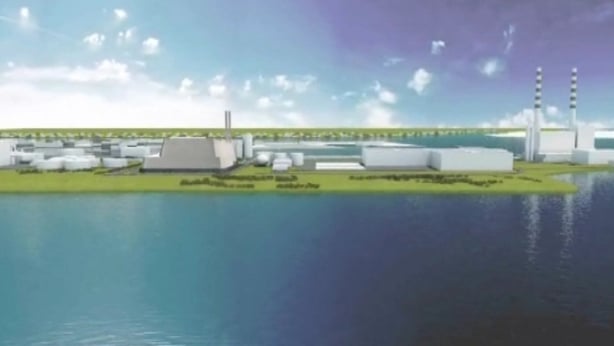
Work on building the controversial Poolbeg incinerator could start before the end of the year following a recommendation from Dublin City Council management that the €500m development should go ahead. 
A report issued today by the council's chief executive Owen Keegan states that the waste project is needed and makes commercial sense.
The decision comes after a favourable value for money audit yesterday by the National Finance Development Agency


Plans for a Poolbeg incinerator, which date back to 1996, have been consistently opposed by local politicians because of its size and its central location.
The plan has also been dogged by controversy, criticism of financial management and cost overruns including €30m spent on consultants and over €50m on land, now valued at just €6m. 
But in his report Mr Keegan points out that it would cost the four Dublin councils over €100m to scrap the Dublin Waste to Energy project because of the money already spent and compensation that would have to be paid to the private partners Covanta.
He also says the project is badly needed as around 500,000 tonnes of waste has to be exported annually due to the shortage of facilities here.  
The plan is likely to be opposed by city councillors at a special meeting next Monday but they do not have the power to stop it.
The council's Chief Executive Owen Keegan says he will listen to their views before making a decision next week.
But it is considered likely that he and the chief executives of the other local authorities in Fingal, South Dublin and Dún Laoghaire/Rathdown will give the go ahead.  
Covanta would be paying the €500m to build and operate the incinerator at Poolbeg with Dublin local authorities having to pay just €5m more for a company to oversee the development and for initial site clearance.
The incinerator, which could be built by the end of 2017, would burn 550,000 tonnes of waste a year and generate enough electricity to power 80,000 homes.  
The report also says that construction would create 300 jobs with 100 operation jobs created on completion.
Under the revised project agreement, the council would have to guarantee a certain amount of income for the first 15 years and would have to pay 58% of any shortfall and get 54% of any profit.
But projections by PwC based on income from the sale of electricity and just 50% of the increase in waste predicted by the ESRI found that the risk is low.
The project's final hurdle - a value for money audit by the National Development Finance Authority - was cleared yesterday.
Critics of the project, which include local residents, a majority of city councillors and some private waste operators, have complained that the size of the plant is too big to be commercially viable and will cost the council money. 
Green Party Councillor Ciarán Cuffe has called the reports prepared for the council as "deeply flawed and lacking in transparency."
In a statement Mr Cuffe said "far from being required to deal with Dublin's own waste, the project can only hope to be marginally viable if it burns the majority of the residual waste generated in the whole country."
Concerns about pollution and size of facility
The Irish Waste Management Association representing private waste companies complained to the Competition Authority claiming the size of the plant would distort the market and hurt recycling rates with waste being sent for for incineration instead.
There are also concerns about pollution, about the visual aspect of the building, which would be the size of Croke Park, and about the impact of the number of refuse trucks arriving at the plant. 
Dublin City Council says all these concerns were examined by An Bord Pleanála before it granted planing permission.
It also points out that a number of other regulatory bodies have cleared aspects of the project - the Environmental Protection Agency when it granted a waste licence, the Energy Regulator when it granted an energy licence and the National Development Finance Agency when it passed three different public private project agreements.
The EU Commission also cleared the project of allegations it had breached rules on procurement and State aid.
The EU did uphold a complaint about the consultants contract for RPS, which was originally estimated at €8m but cost over €30m, as the project faced 10 years of delays.
The EU found that the contract should have been put out for tender again in the interim.
There were also complaints about the land purchases, which cost more than €50m for a site now valued at €6m.
A local government audit criticised financial management pointing in particular to one €10m overspend.
Over €22m was paid for new premises for Westway Terminals Hibernian Ltd, which was moving from its original site in Ringsend to facilitate the development of the incinerator.
The original contract was for just under €12m.
But today's report points out that these costs - totaling over €100m - would have to be paid now if the incinerator was scrapped.
Up until now that money has been carried over on the city council's accounts.  
But if it goes ahead the councils would earn at least €30m and up to €155m over the life of the 45-year project based on a cost analysis by PwC.
The opposition of then-Minister for Environment and local TD John Gormley was another delay for the project as it had to wait on a foreshore licence.
Site clearance works had to stop and then Covanta lost its funding opportunity. There were further delays because of complaints to the EU.
Figures in the report compiled by RPS show that even if the plant goes ahead, and recycling targets are met and the increase in waste is only half that predicted by the ESRI, there will still be nearly 500,000 tonnes of municipal waste left over in 2020.
-----------

*Dublin city councillors have voted overwhelmingly against the Poolbeg incinerator project.
The councillors voted 52 to two against going ahead with the plan.
Dún Laoghaire-Rathdown councillors also opposed it but Fingal voted in favour.


However, the final decision will be made by the chief executives of the four local authorities.
A special meeting of Dublin city councillors this evening was told that motions have been passed opposing the Poolbeg incinerator on 30 occasions but the power to decide is not in their hands.
Many councillors expressed the view that the incinerator is too big and there also concerns about the impact locally.
But council officials said there is more than enough refuse being generated in the Leinster region to make the 550,000 tonne facility viable.
The council's Chief Executive, Owen Keegan, said he could not release financial details of the deal with private partners Covanta because of commercial sensitivity.
However, he pointed out that the plan had been passed after vetting by the National Finance Development Authority.
It is expected that the chief executives of all councils in Dublin will give the final go ahead within weeks.

4 Jun 2014

Dublin: More Irish Beaches Get Blue Flag Awards

There has been an increase in the number of Blue Flag awards this year, with a total of 134 awards being given.
More than 76 beaches and four marinas were awarded the prestigious Blue Flag award representing an increase in six Blue Flag awards since 2013.
Meanwhile, 54 beaches in Ireland were awarded the Green Coast Award representing an increase in nine awards.
Eight Blue Flags were regained in four Local Authority areas.
Four Blue Flags were regained in Portmarnock, Portrane, Donabate and Skerries South Beach in Fingal.
Water quality
Morriscastle in Wexford and Ballybunion North in Kerry regained their Blue Flags after failing to comply with water quality criteria in 2013.
In Waterford, two Blue Flags were regained in Councellors Strand and Dunmore Strand.
Blue Flag applications were received for 81 beaches in total, however five beaches were not awarded the Blue Flag due to ongoing works to repair extensive damage caused by the Spring storms.
Dog’s Bay in Galway lost the Green Coast Award due to considerable infrastructural damage at the beach as a result of the storms.
First timers
Trá gCaorach Inis Oirr in Galway and Kilfrassey in Waterford have been awarded the Green Coast Award for the first time.
The Green Coast Award recognises beaches for their clean environment, excellent water quality and natural beauty. These beaches may not have the necessary built infrastructure required to meet the criteria set for Blue Flag status.
These beaches were Bertra and Mulranny in Mayo, Rossbeigh in Kerry and Miltown Malbay and Spanish Point in Clare.
An Taisce announced the International Blue Flag Award and the National Green Coast Award recipients today, where the Minister for the Environment, Community and Local Government, Phil Hogan siad: 
I am pleased to say that a total of 134 beach and marina awards will be made today. This represents an increase of 15 on the 2013 awards and is testament to efforts of communities, local authorities and An Taisce and the sterling work they do. Results might even have been better except for the devastation of the storms last winter which caused significant damage in some areas.

28 May 2014

Dublin: SVP Charity Concerned At Impact Of Water Charges On Poor Households

The Saint Vincent de Paul's submission to the regulator criticizes the cost of water
The Society for St Vincent de Paul has expressed concern that childless households with more than one jobseeker, or with adults on low pay, are expected to bear the full brunt of water charges.
In a submission to the Commission for Energy Regulation, the charity highlights the Government's failure to cushion the low-income group with additional free units or related welfare payments.
The Saint Vincent de Paul's submission to the regulator criticizes the cost of water predicted by the Government earlier this month.
It says childless households with two or more jobseekers, or adults on low pay, are only being given the standard annual household allocation of 30,000 free litres which means they are expected to pay the same price as a household of high income dual-earners.
The charity expresses particular concern that at a time of continued high unemployment, and given the essential nature of water consumption, the low-income group concerned is being exposed to water charges without additional allowances.
It also says that after 2016, the financial support currently given by Government to Irish Water will taper off significantly, confronting all people and families on low and fixed incomes with extreme difficulties as they try to meet ratcheting charges.
It adds that a single part tariff in parallel with domestic water allowances and fixed pricing until 2016 may provide the short-term  protection needed by vulnerable poor households.
However, it says that it is not clear what the long-term consequences of the Government's revised direction on pricing will be until more official data and analysis is published. 

13 May 2014

Plans In Pipeline To Bring Cool, Clear Shannon Water To Dublin: UPDATED

A €500m plan to pump water from the Shannon to supply the capital is due to be announced later this week.
Irish Water is studying a number of locations where it can extract water from Ireland’s largest river before pumping it to a reservoir in the Midlands to supply Dublin.
The building of new housing estates to accommodate the growing population - with sufficient water supplies to support it - is reliant on the project, which may be completed by 2020.

CAPACITY:

The plan to take water from the Shannon, part of a €1.1bn 
investment to be announced this week, is likely to be 
opposed by people living along the river.

As it stands the water system in the Dublin region - working at beteen 96 and 99pc capacity - is described as “operating on a knife edge on a daily basis”.

Dublin suffered water cuts last year due to problems with a waste treatment plant.

A source said: “The slightest impact and we are in serious difficulties as demonstrated a couple of months back with the difficulties at Leixlip treatment plant. The Vartry scheme 
which also serves Dublin is 19th century and

has all sorts of problems.”

The scheme to take Shannon water is deemed necessary 
to relieve this situation with 
the planning process for the project set to continue up to 2016.

During that time an Environment Impact Statement will be drawn up and there will be public consultation as well as an application to An Bord Pleanala.

If planning permission is granted, designing the system will take another 18 months with construction taking up 
to three years after that.

It could be completed between 2020 and 2022 depending on delays.

News of the plan comes as it emerged that the agency is scrapping a €340m expansion of the Ringsend waste treatment plant, with Irish Water saying it couldn’t justify the costs.

It had originally planned to run a 9km pipe to pump waste water into Dublin Bay.

UPGRADING:

According to the agency the upgrading of the plant can be completed at half the cost with the underwater pipe element being abandoned.

The existing waste treatment centre is too small and does not meet European standards.

Dublin City Council’s plan to expand it was due to start this year with an estimated cost of €270m.

However, the Irish Times reports that when Irish Water took over responsibility for waste water in January a risk assessment study put the cost at €340m.

A spokesman said that new technologies have emerged which will cut costs for the project to €170m.
------------
UPDATE: Irish Water is planning to invest almost €1.8 billion in water and waste treatment improvements over the next three years.
The investment, which is substantially more than the indicative funding available to the utility, will deliver urgently needed improvements in drinking water quality, leakage, water availability, and waste water compliance.
Five months after being set up by the Government Irish Water is now taking control, reprioritizing, and ramping up the water infrastructure programmes of our 34 local authorities.
The programme is going to cost €1.77 billion in the first three years, but there will be billions more spent over the following five or six years.
That represents a big boost in investment for the economy with over 380 separate projects listed.
The priorities include eliminating boil water notices in Roscommon, providing more water, and reducing disruptions to water supply in the Dublin Area.
Improving water quality, increasing waste water treatment capacity, and improving environmental compliance are also priorities.
With in excess of 700 million litres of water per day being lost through leaking water pipes a major programme to tackle leakages is included.
Irish Water says that this leakage programme, combined with the completion of existing works at Ballymore Eustace and Leixlip, will solve Dublin's water issue in the short-term.
However, Irish Water says that the project to divert water from the river Shannon to the Greater Dublin Area will still be required in the medium-term.