Showing posts with label Dublin: Thousands March In Support Of Palestine As Death Toll Reaches 1'000. Show all posts

30 Aug 2014

BEIRUT: Palestinian Refugees Must Now Struggle With Addiction To Drugs

Shatila refugee camp, Beirut - Smoking a cigarette in front of a football field in Beirut's Shatila refugee camp, Altayeb, a former drug dealer, says he spent many nights alone in his bathroom getting high on medical narcotics. 

"I often bought my supply from the pharmacy. They have pills that make us feel like Superman," he says.
The 40-year-old Palestinian refugee, whose parents fled in 1948 from Akka, a city in modern-day Israel, still remembers the high. "I remember how it used to calm my nerves," says Altayeb, fidgeting with his lighter.
He says he started selling drugs after securing a job as a driver for a Lebanese DJ; he was told to bring "party favours" before escorting clients, and his drug-dealing quickly escalated into a lucrative business.


Altayeb is not alone. While displacement, poverty and confinement are contributing factors, a lack of governance in the Palestinian camps has also played a vital role in the spread of drug abuse and trafficking among Palestinian refugees in Lebanon. The country hosts more than 470,000 Palestinian refugees, of whom over 50 percent live in 12 refugee camps.
Legal restrictions prohibit Palestinians from being able to pursue Lebanese citizenship, inherit property or practice about 30 different professions. Not only are Palestinians excluded from social and political opportunities, but since the 1969 Cairo agreement, refugee camps have been placed outside Lebanese governance and under the quasi-authority of Palestinian factions.

RELATED ARTICLE: Link.
news.yahoo.com/housing-group-says-20-years-rebuild-gaza-092845840.html
With armed groups competing for control, and a limited number of non-governmental organisations working with drug addicts in the Palestinian camps, it is difficult to estimate the prevalence of drug use there.
Due to an absence of regulation, medicines that typically require prescriptions are legally sold in camp pharmacies to patients without prescriptions, camp residents and human rights groups say.
The most commonly abused medications in the camps are Tramadol and Xanax. Tramadol (30 pills are sold for $5) is an opiate derivative used for pain relief, while Xanax (eight pills are sold for $8) is prescribed to alleviate anxiety. Both drugs can produce side effects such as nausea, hallucinations and sedation, and as user tolerance increases, addicts consume heavier doses to achieve the same high.


While Lebanese pharmacies must register under a licensed practitioner, the industry is unregulated in Palestinian refugee camps. Sulieman, who did not give Al Jazeera his last name, is a shopkeeper at his brother's pharmacy in Ein el-Hilweh, a Palestinian refugee camp in the southern city of Saida. He said that even if his brother wanted to become an accredited pharmacist and register his store, work restrictions confine his business to the camps.
Sulieman's brother, Mohammed, told Al Jazeera that he receives most of his drug inventory from a Lebanese pharmaceutical distributor, although the company he named denied supplying medicines to camp pharmacies.
"They give us everything we ask for," Suleiman insisted.
Raed Ataya, a lawyer and project coordinator for Nabaa, a Lebanese group that supports drug addicts in Saida, said although Lebanese pharmaceutical companies are legally prohibited from supplying pharmacies in the camps, in practice the government cannot prevent Palestinians from importing medicine. "That would be inhumane," Ataya told Al Jazeera. "We need to regulate pharmacies, not forbid them."
Many pharmacy owners are afraid that their drugs may be resold to armed factions, so shopkeepers are often reluctant to supply people they do not know. But Altayeb told Al Jazeera he had a consistent supplier: "I knew two guys well," he said. "They often gave me $2,000 worth of Tramadol and I was able to sell it outside the camp or cut it with other drugs."
Nadya Mikdashi, the executive director and co-founder of Skoun, a Beirut-based NGO offering support and rehabilitation, said, in the absence of regulation, access to prescription medicine comes down to the ethics of individual pharmacies. "These pills are like heroin, but in pill form," Mikdashi told Al Jazeera.


Lebanese law criminalises drug abusers, and all hospitals are required to call the police to report anyone who has overdosed. This can have negative implications for those needing lifesaving assistance, Mikdashi noted.
Two hospitals in Beirut told Al Jazeera they received memos from the Lebanese Internal Security Forces in January, reminding them to contact the police if they suspected a patient had used drugs.
Since Palestinians only have access to primary healthcare from the United Nations' Relief and Works Agency (UNRWA), a Palestinian refugee agency, they must travel to hospitals outside the camps.
And with strong stigmas on Palestinians still prevailing, human-rights groups say they have a difficult time breaching the topic of drug addiction in the camps. Mikdashi said that with all the discrimination Palestinians face in Lebanon, many wonder why drug addiction is being made a priority.
"Poverty, low access to emergency services and fear of the law, these are the primary reasons why overdoses are underreported," Mikdashi said.
As criminalisation has made it difficult for addicts to locate support, Skoun has reached out to high-risk areas by making supplies of Naloxone, a drug designed to reverse opioid overdose, widely available. But the organisation is not able to reach everybody.
"I lost my friend to a Tramadol overdose," Altayeb said. "I remember when his wife called and started crying; where was I supposed to take him?"
Soon after his friend died, Altayeb was arrested by Lebanese authorities for carrying hashish outside the camp. Four months in a Lebanese prison was torturous, he said, and weeks after his release, he decided to seek support. Today, drug-free for more than two years and earning $300 a month as a taxi driver, Altayeb says his criminal record coupled with other restrictions on Palestinians in Lebanon has left him with few other options.

"Maybe I'll open a pharmacy," he grins. "I was always good business for them and they were always great business for me."

28 Jul 2014

GAZA, Palestine: UN Security Council Calls For Immediate Ceasefire: *NEW UPDATE

More than 1,030 Palestinians have died in the fighting as well as 43 Israeli soldiers
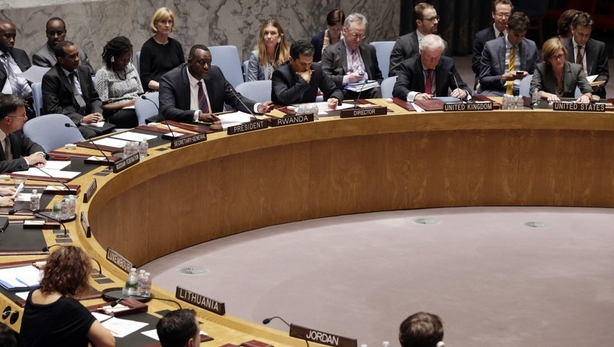
The United Nations Security Council has called for an immediate humanitarian ceasefire in Gaza to allow for urgent aid to reach civilians as the conflict between Israel and Hamas enters its third week.
The 15-member council released a statement this morning calling for the truce during the Muslim Eid festival marking the end of Ramadan.
The council expressed "strong support" for an "immediate and unconditional humanitarian ceasefire", and urged all sides to accept and fully implement the truce.


More than 1,030 Palestinians have died in the fighting as well as 43 Israeli soldiers
It voiced "grave concern regarding the deterioration in the situation as a result of the crisis related to Gaza and the loss of civilian lives and casualties."
More than 1,030 Palestinians have died in the fighting as well as 43 Israeli soldiers.
Palestinian representative to the UN, Riyad Mansour, expressed disappointment with the statement, saying it fell short of a formal resolution demanding that Israel withdraw its forces from Gaza.
"They should have adopted a resolution a long time ago to condemn this aggression and to call for this aggression to be stopped immediately," said Mr Mansour following the meeting.
"We are disappointed in that sense," he said, adding that the Palestinians would continue pressing the Security Council to move toward a formal binding resolution.
The emergency session came after Israel and Hamas ignored calls for a truce, with Israel pounding Gaza with artillery yesterday after a night of rocket fire from Hamas.
The two sides observed a 12-hour pause on Saturday, allowing Gaza medics to pull bodies from rubble.
The Council said "civilian and humanitarian facilities, including those of the UN, must be respected and protected" following outrage over the Israeli attack on a UN-run school in Gaza this week that left 15 dead.
The Council called on Israel and Hamas to try to reach a ceasefire based on the Egyptian initiative, and applauded US Secretary John Kerry's efforts to broker a deal.
-------------
NEW UPDATE: *Three children were among 10 people killed in fresh Israeli raids across Gaza tonight, according to emergency services.
Five people, including three children, were killed when a tank shell slammed into a house in the northern town of Jabaliya, spokesman Ashraf al-Qudra told AFP
Another person died in a strike on central Gaza, and four more were killed in and around the southern city of Khan Yunis, he added.
Earlier today, exchanges of fire killed eight Palestinian children in a Gaza refugee camp.
The missile that slammed into a public playground in the seafront Shati UN refugee camp also killed at least two other people and wounded another 46, many of them also children, the emergency services said.
Mideast Israel Palestinians

The scene at the Shati refugee camp, in the northern Gaza Strip, earlier today.
Tonight’s strikes came as Israel began an intensive bombardment of the battered Palestinian enclave after four soldiers were killed in a mortar attack on southern Israel and a fifth died in fighting in southern Gaza, the army said.
“Over the course of the day, 5 IDF soldiers were killed,” a statement said, indicating that four of them “were killed along the border of the Gaza Strip as a result of mortar fire”.
Their deaths raised to 48 the total number of Israeli soldiers killed since July 17 when troops began the ground phase of a major military operation against Gaza militants.
The overall operation began on July 8, and has so far killed a total of 48 soldiers and three civilians — two Israelis and a Thai farm worker.
More than 1,050 Palestinians have been killed and over 6,200 wounded.
United Nations figures show more than three quarters of the victims were civilians — among them more than 230 children and around 120 women.
UN Secretary General Ban Ki-moon has urged an immediate end to the ongoing violence, saying earlier that the area was in a “critical condition”.
“In the name of humanity, the violence must stop,” he told reporters in New York, after returning from a visit to the region.
Includes reporting from AFP.

Follow Joseph Anderson at: https://www.facebook.com/josephandersonyahoo.ie 

26 Jul 2014

Dublin: Thousands March In Support Of Palestine As Death Toll Reaches 1,000: UPDATED

Israel has agreed to extend by four hours a humanitarian ceasefire agreed in Gaza, an Israeli government source has told Reuters news agency.
It was not immediately clear if Hamas had also agreed to prolong the original 12-hour ceasefire.
Scores of bodies have been recovered from rubble across Gaza during the initial, 12-hour ceasefire.


The humanitarian truce began at 8am local time in Gaza and many people emerged from shelters to inspect their homes and to buy food.
Israel described the truce as a humanitarian window.
Many neighbourhoods have been destroyed and bodies are being taken from the rubble across Gaza.
The death toll has reached 1,000 people in Gaza after 19 days of fighting. 37 Israeli citizens have been killed.
LINK TO PHOTO ALBUM:
https://picasaweb.google.com/100853986949465414816/theirishpalestinesolidaritycampaigndemorallyindublinireland 
Officials from the US, France, Britain and four other countries were meeting in Paris to discuss ways to help achieve a permanent ceasefire. 
The German foreign minister Frank-Walter Steinmeier said that a ceasefire would only last if Gaza no longer served as a weapons depot for Hamas.
He also urged that living conditions be improved.
Israel's military said it would hold fire for 12 hours, but would press on with its search for tunnels used by militants.
A spokesman for the Islamist group Hamas said all Palestinian factions would abide by the brief truce.
Hamas wants an end to an Israeli-Egyptian blockade of Gaza before agreeing to halt hostilities.
Protests across Ireland
People held protests, vigils and demonstrations across Ireland. www.ipsc.ie 
The biggest was hosted by the Ireland Palestine Solidarity Campaign in Dublin, it was supported by other organisations including the Irish Congress of Trade Unions.
The Dublin demonstration started at the Spire and the rally marched to the Israeli Embassy where over 1,500 people listened to Palestinian and Irish speakers.
There were protests in Belfast, Cork, Derry, Limerick, Tralee, Waterford and many other places.

Follow Joseph Anderson at: https://www.facebook.com/josephandersonyahoo.ie 
Keywords: gaza, israel