OUR COVER PHOTO Is:The Ruin Of Brighon's West Pier Destroyed By Fire In 2003:
Crime News Journal is a news Blog based In Ireland, reporting on news about the illicit drugs trade national and international plus other crime stories, in addition to more general news items.
Showing posts with label Dublin: 80'000 Women Went Through Mother & Baby Homes' Thousands Of Children Were Starved To Death. Show all posts
Showing posts with label Dublin: 80'000 Women Went Through Mother & Baby Homes' Thousands Of Children Were Starved To Death. Show all posts
He took off his cap and knelt down. A short time later, he got up and left.
He had fulfilled his mission by paying his respects in front of a coffin carrying a man he didn't know.
Pat McGrath reports on touching scenes as Sean Parker was laid to rest
The last time Sean Parker was in the same village was in 1946, before
his family left their home on the Galway / Roscommon border.
After the death of their mother Annie the previous year, the Parker
family of five girls and two boys moved to Dublin with their father.
Men of Arlington documents the lives of residents of London's Arlington House, which housed thousands of Irishmen who fled Ireland in the 1950's in search of work.
A few years later, in the early 1950s, Sean Parker moved to England.
He spent the rest of his life there, experiencing the same hardships
many Irishmen of his generation did in London and other British cities
in the mid-twentieth century.
Despite those ups and downs, memories of his Galway childhood endured.
It was these recollections that led carers in southeast England to begin
a search for friends or relatives of the 79-year-old here, when he died
last July.
That journey came to an end when Sean Parker was laid to rest in
Ballinakill Cemetery, a short distance from the village of Glinsk, on
Wednesday afternoon.
Recognising the name when an official from Medway Council spoke to Joe
Duffy on RTÉ's Liveline, local man Jimmy O'Toole called some others who
would have known Sean Parker as a boy.
One sat beside him in school every day.
Another remembered his last day in the village, when the tearful
ten-year-old left his beloved terrier dog in the care of a neighbour,
before setting off for Dublin.
Others, who were slightly older, remembered carrying Sean's mother to her final resting place in the mid-1940s.
In the weeks that followed, the community came together to do all it
could to ensure that the man who left them seven decades earlier would
not end up in an unmarked grave in England.
All repatriation and burial costs were covered by businesses and
individuals both here and in the UK. Sean Parker would be brought home
and laid to rest beside his mother in Co Galway.
His last journey a mirror image of hers, as locals shouldered his remains on the half-mile walk from church to graveyard.
Joining this small community on a day filled with emotion, were people
from Cavan, Clifden, Clare and elsewhere. None of them had any link with
this village in northeast Galway.
None knew Sean Parker or much about the life he led. But his passing
and his voyage home held a symbolism that was revealed in the eyes of
those watching the simple coffin as it was carried from the church. Here
was somebody's brother, somebody's son.
He could have been anybody's brother. Anybody's son.
The man who had left the village before the funeral mass began summed it up.
"I was in England too ... they were tough times ... but that's another story."
Enough for the moment to remember those who never made it home. And today, to remember one who did.
--------------
ENDS:
The National Archives of Ireland contain just a few snippets, but they are enough to make clear that State officials in 1950s Ireland knew the country was a centre for illegal international baby trafficking. The number of children involved can’t even be guessed at, but we can be sure they were all “illegitimate”. FACEBOOK GROUP: https://www.facebook.com/groups/avoiceforfirstmothers/ FOR THE FULL STORY Go To - LINK:
Ireland was regarded as a “hunting ground”, in the words of a senior civil servant, where foreigners in search of babies could easily obtain illegitimate children from mother-and-baby homes and private nursing homes, then remove them from the State without any formalities.
There were both legal and illegal adoptions. During the 1950s up to 15 per cent of all illegitimate Irish children born in mother-and-baby homes each year were taken to the United States with the full knowledge of the State. In total more than 2,000 illegitimate children were removed from the country in this way. Most were adopted by wealthy American Catholics.
But it seems that hundreds, if not thousands, more children were taken from the country without sanction or public record-keeping. Many were handed to foreigners. On October 8th, 1951, The Irish Times reported that in the previous year “almost 500 babies were flown from Shannon for adoption”, a number that the paper said “is believed to have been exceeded” during the first nine months of 1951. In the first week of October alone, it reported, 18 “parties” of children departed from the airport.
These figures far exceed the number of official “adoption passports” issued to let adoptive parents take children out of Ireland. In the whole of 1951 only 122 such passports were issued, a fraction of the number of children actually taken from the State.
Some children were handed over to men travelling alone, as when a US businessman left, after a brief visit to Ireland in 1949, with two toddlers from the Braemar home in Cork. The New York Times called it “a surprise for the wife”. The same year a US airman was given two children to take home by the Sacred Heart nuns at Manor House mother-and-baby home, in Castlepollard. This was reported in three US newspapers.
On February 2nd, 1955, one American newspaper, the New Haven Register, carried a startling story under the headline “50 American couples buy Irish babies through international adoption ring”. Claiming a senior garda as its source, the article said the Americans paid between $600 and $2,000 per child. The children had reportedly come from private nursing homes around Ireland, including five in Dublin.
“Could not truthfully be refuted”
When the Department of External Affairs asked the special detective unit to comment on the article, the only claim it disputed was that the paper’s source was a garda.
Higher up the legal pecking order, the secretary of the Department of Justice, Peter Berry, advised that the story “could not truthfully be refuted” because there was “some basis for the allegation in question”.
Three years earlier a German newspaper, 8 Uhr Blatt, had carried a somewhat similar exposé headlined “1,000 children disappear from Ireland”. Many of the children, it was suspected, were destined to be sold on the United States’ thriving baby “black market”, where the going price was $3,000 a child, according to the newspaper. On this occasion the Irish chargé d’affaires in Bonn, Aedan O’Beirne, wanted to insist that the paper “publish a rebuttal of the story”, but his superiors in Dublin noted that “no action is required, especially as the article is largely correct”.
With the authorities determined to keep the scandal under wraps, the traffickers were pursued without vigour, and the children, whose welfare seemed of little concern to the State, were abandoned to their fate.
The scandal continued into the 1960s when a Garda investigation into another illegal adoption racket – one police believed was run by a prominent Irishman – led to the prosecution of a Dublin midwife, Mary Keating, who had also been involved in the 1950s venture. Keating was interviewed as part of a special-branch operation in the 1950s, along with birth mothers. At that time, special branch also communicated with adoptive parents in the US.
Keating owned St Rita’s nursing home in Ranelagh, and in 1965 she was put on probation for falsifying a birth record. But behind this seemingly technical charge lay an enterprise involving private nursing homes that ran a sideline business providing “illegitimate” babies, born in their homes, to people who, for whatever reason, couldn’t or didn’t want to adopt legally. Their modus operandi was simple. Instead of registering the baby in the name of its unmarried mother, as the law required, they registered it in the name of the couple to whom the baby was given, a serious criminal offence.
The falsification process is outlined in a letter from St Rita’s to a prospective adoptive parent in the US. It is also logged in detail in the Irish special-branch report. The New Haven Register article from 1955 describes the situation for US military personnel, who accounted for many of the adoptions. “To adopt a baby the American soldier and his wife would travel to Dublin, where the wife checked in to the nursing home as an expectant mother. An Irish woman would actually bear the child, but the birth would be registered in the name of the American.”
“The impact of this practice has been devastating for many people,” says Christine Hennessey of Barnardos, the children’s charity, because “it is almost impossible for them to find out anything about their background” – something many adopted people yearn for and the rest of us take for granted.
Nine ledgers contain information about discharges and admissions to the Tuam home
Minister for Children Charlie Flanagan has announced a statutory Commission of Investigation into mother-and-baby-homes across the State.
Speaking on RTÉ's News at One, Mr Flanagan said that it is too early to say who will lead the commission, but that he has some names in mind.
He said that the Government will receive an initial report from a cross-departmental investigation by 30 June.
Mr Flanagan said its work will inform the Government on the terms of reference and composition of the Commission of Investigation.
He said it is important that a light be shone on "these dark periods".
Mr Flanagan said he hopes the inquiry will examine all issues, including the high mortality rates, the burial practices following these deaths, the legal circumstances around adoptions and the question of conducting of clinical trials.
It is important to get political and national consensus on the terms of reference for the commission of investigation, he said.
There are complex legal issues and complex social issues involved, he said, adding that it was important first and foremost to establish the facts.
Mr Flanagan urged the Church authorities to hand over all documents and records to the inquiry.
He also indicated that the Protestant-run Bethany Home in Dublin could be included in the inquiry.
He did not put a time frame on the duration of the inquiry and said questions around compensation are also premature.
Tuam historian Catherine Corless has welcomed the announcement.
Mrs Corless, whose research into the deaths of children in the Tuam home brought the issue to the fore, described the development as "fantastic".
She said an investigation was not the initial intent of the campaign to commemorate the children but that it was a good development.
Mrs Corless said the Cabinet decision would have a particular relevance for many groups around the country who had been "knocking on brick walls" in an effort to find out more about mother-and-baby homes.
Fianna Fáil spokesperson on children Robert Troy said any investigation needs to be done in an extremely sensitive manner and should be above party politics.
Mr Troy said the women who stayed at the homes had nothing to be ashamed of.
He said they should be assured that if they come forward, they will have confidentiality, and nobody would be judging them.
He said Fianna Fáil party members had been meeting constituents, who were former residents of the homes, and that these people were terrified that a full independent inquiry could identify them.
The Philomena Project welcomed the Government's announcement of an inquiry into mother-and baby-homes.
The project has fully endorsed all calls for an independent statutory inquiry into the homes, particularly the issue of forced adoption.
Earlier, it emerged that extensive records from the Bon Secours mother-and-baby home in Tuam, Co Galway, make no reference to burial locations for children who died there.
The Child and Family agency, Tusla, has several original ledgers from the mother-and-baby home, containing a range of administrative data.
It is understood the material was initially passed to Galway County Council when the home closed in 1961 and would have been subsequently transferred to the Western Health Board and then the Health Service Executive, before coming into the care of Tusla at the beginning of the year.
There are a total of nine ledgers containing information about discharges and admissions to the home between 1921 and 1961.
These list the names of mothers, the dates on which they were admitted and discharged as well as the name and date of birth of their children.
The agency also has possession of quarterly returns from the home to Galway County Council between 1919 and 1961.
In these documents, the total number of mothers and children in the home are listed for each three-month period.
In the event of deaths having occurred in any quarter, these would be detailed. In many cases, the cause of death is recorded but information was not always consistently maintained in this regard.
There are no burial records in the returns and no mention of burial locations in any of the other material in the care of Tusla.
Several maternity registers from Tuam dating from 1935 to 1961 are also being stored. These contain medical records of births.
It is understood that the death of a baby during childbirth or a stillbirth would have been registered here.
A fourth set of documentation has information relating to children who were "boarded out" from the home between August 1929 and November 1959.
This was the term used to describe the modern day practice of fostering. This data also details the situation regarding babies that were born in Tuam and placed for adoption.
All of the documents are being stored in a secure, fireproof room in one of the agency's Galway offices.
The material is held in trust by Tusla, which has a duty of care to look after the information and to ensure that only those who are entitled to look at it gain access.
The information contained in the books is strictly confidential and subject to usual data protection regulations. It can only be accessed by individuals whose details are contained in the files.
However, a spokesperson said it would be made available to any State inquiry and that there would be no legislative barrier to this. It is likely that personal details would be redacted if this were to happen.
*Ireland’s Catholic Bishops have apologised for hurt caused by the church's role in the mother-and-baby home system and the often judgemental, stigmatising and unforgiving culture that underpinned it.
They say the highest priority is to enable those who were directly affected by the harrowing story of the homes to receive recognition and appropriate support.
They have also expressed support for the Government's intention to publish legislation on "tracing" rights for adopted children and their mothers with due regard to the rights of all involved.
Welcoming the planned inquiry, they say it could seek to establish a clear, straightforward method for tracing and put in place resources to assist those who are searching for their parents or children.
In a statement issued from Maynooth, where they are attending their routine summer meeting, the bishops say the harrowing story which is continuing to emerge of life and death in the homes has shocked the people of the country.
They say it is disturbing that the residents of the homes suffered disproportionately high levels of mortality and malnutrition, disease and destitution.
They also say it is sad for the Irish people to be reminded of a time when unmarried mothers were often judged, stigmatised and rejected by society, including the Catholic Church, and they lament that this culture of isolation and social ostracising was both harsh and unforgiving.
On contemporary attitudes, they urge that everyone live out the Gospel message by ensuring that all children and their mothers always feel wanted, welcomed and loved.
They apologise for the hurt caused by the church as part of the mother-and-baby home system, and say they are mindful of the words of Jesus, reported in the Bible, "Let the little children come to me, because it is to such as these that the Kingdom of God belongs".
The bishops say it is important that both the Commission and people in general approach the matters under investigation with compassion, determination and objectivity.
The say more needs to be learned about what the society of the period during which the homes operated was really like and to consider the legacy it has left us as a people.
But, above all, they say, we need to enable those who were directly affected to receive recognition and appropriate support.
They say that to facilitate progress in the Investigation they encourage all those who had any responsibility for setting up, running or overseeing the Homes or adoption agencies to gather any documentation or information that might be of assistance.
The prelates vow to continue to work at a local level to ensure that burial sites are appropriately marked so that the deceased and their families will be recognised with dignity and never be forgotten.
And finally, they ask for prayers for all who are personally affected in any way.
CASTLEPOLLARD Ireland (Reuters) - In the leafy grounds of a centre for the disabled in rural central Ireland, a small tombstone hints at the building's previous role as a "mother-and-baby home". It reads: "In Memory of God's Special Angels".
No names, no dates, just an acknowledgement that buried in the garden of the Manor House in Castlepollard are children born to unwed mothers at the Church-run institutions that dotted Ireland half a century ago.
The discovery of a mass grave at a similar home, two hours drive to the west in the small town of Tuam, has prompted the Irish to ask why so many babies died, anonymously, in the care of the Catholic Church that was once a pillar of respectability.
"If something happened in Tuam, it probably happened in other mother-and-baby homes around the country," said Archbishop of Dublin Diarmuid Martin, who has seen the Church's authority shattered by revelations of sex abuse by priests and cruelty at so-called Magdalene laundries where "fallen women" were forced to work in harsh conditions.
"All the indications are that those who were running the institutions didn't understand or did not want to understand how you looked after children and how you examined the special care children needed at that early stage," Martin told national broadcaster RTE.
The 796 child deaths detailed by an amateur historian at Tuam from 1925 to 1961 has highlighted a mortality rate among "illegitimate" infants that academics describe as "staggering".
Government records show that throughout the 1930s, 40s and 50s, the rate was often more than five times that of children born to married parents. On average, more than one in four children born out of wedlock died.
Ireland was not alone in having a high fatality rate among this vulnerable group, however the 295 deaths per 1,000 illegitimate births recorded in 1929, for example, was more than double the 140 inNorthern Ireland or 105 in England, research by University College Dublin historian Lindsey Earner-Byrne showed.
GRACE OF GOD
The revelations have forced modern Ireland to take an uncomfortable look back just a generation ago at the treatment of pregnant single women, who were seen as deeply immoral, and their children, regarded as a drain on public finances.
Of the 796 death certificates collated by amateur historian Catherine Corless, gastroenteritis, bronchitis and malnutrition were common causes of death among newborns and young children. Illness apparently spread rapidly in the homes.
"There but for the grace of God, I would have been under the ground too," Mari Steed, who was born in a mother-and-baby home, in the County Cork town of Bessborough, in 1960, told Reuters by telephone from her home in Philadelphia.
"In the year I was born things had gotten a little better and I was actually delivered by Caesarean section at a hospital so I can only thank the faiths that they had the common sense to realise that my mother couldn't deliver me at Bessborough."
In a memoir of her time at Bessborough in the early 1950s, midwife June Goulding described a tough regime where women, stripped of their identities, suffered through labour often unattended and almost always without basic medical treatments.
Recalling their post-natal care, she wrote how some babies, rather than being fed by their own mothers, were simply passed around to any resident capable of breastfeeding.
In some cases, babies were subjected to vaccine trials. Steed said GlaxoSmithKline, which took over the drug firm that ran the trials, Burroughs Welcome, confirmed to her that she was among the infants experimented upon.
A spokesman for GSK said the activities, if true, were "very distressing" and that it would cooperate with any investigation.
"DERELICTION OF DUTY"
The homes also facilitated thousands of adoptions, in many cases compelling unwed mothers to give up their babies. Some 90 percent of children born outside marriage were adopted in the two decades after adoption was explicitly legalised in 1953.
While run by nuns, the "mother-and-baby" homes received state funding and, as adoption agencies, were also regulated by the state. There was "a sort of collusion" between church and state, according to Archbishop Martin, stretching from church leaders and government ministers to powerful civil servants.
"The fact that the moral connotations of the 'problem of the unmarried mother' had real and deadly consequences did little to spur action," University College Dublin's Earner-Byrne wrote in her 2007 book 'Mother and Child'.
"Dereliction of duty in this regard characterised all administrations until the 1970s. It was cheaper, in monetary terms, to allow the problem of the unmarried mother float in a moral never-never land."
Ireland's government, whose predecessors only extended child benefit payments to unmarried women in 1973, after the homes had closed, is considering an inquiry into what it called the "deeply disturbing" discovery in Tuam.
The Church has called for a comprehensive independent investigation into the child deaths and the adoption system. Public outcry may leave the government little choice.
"I honestly believe that governments have been too afraid to lift the lid, knowing the type of atrocities they would likely find," said Steed, in Philadelphia, who spent 10 years navigating Ireland's archaic tracing system to find her birth mother who was forced to give her up at 18 months.
"Now I think we're at a tipping point where there's just no choice left. You have to do it."
(Additional reporting by Ben Hirschler in London; Editing by Robin Pomeroy)
*DEATH rates at a Dublin mother-and-baby home were almost as high as mortality rates at the Bon Secours home in Tuam, recently released records held by church authorities have revealed. The Dublin death rates are coming to light as official inquiries by gardai and a number of Government departments get underway into the deaths of almost 800 children at the Tuam home in a 36-year period ending in 1961. Documents that belonged to former Dublin Archbishop John Charles McQuaid, who died in 1973, show that St Patrick’s mother and baby home at Pelletstown in Cabra also had high death rates in at least one year. The records show that one in every three babies died in the home on the Navan road in 1933. Convent: The Pelletstown death rate was 34pc in that year while, at the same time, the annual death rate in the County Galway convent-run home in Tuam was 35pc. The Dublin deaths may also come under official scrutiny now. Even higher death rates were recorded that year at the Bessborough mother and baby home in Cork (39pc), and at the Sean Ross Abbey mother and baby home in Roscrea, Co Tipperary (37.5pc). An inter-departmental group has already met to discuss how a wide-ranging inquiry should proceed into infant deaths at all mother and baby homes which operated in Ireland for several decades. The group consisted of representatives from five Government departments - Health, Children, Justice, Social Protection and Environment. The examination will be spearheaded by the Department of Health and the group is expected to report back to the Cabinet in a fortnight with recommendations on the formation of a high-powered inquiry. The Cabinet will then decide if a full Commission of Investigation should be set up and what remit and powers it should be given. Two senior gardai have also been tasked to carry out a fact-finding mission into the 796 deaths at the Tuam home between 1925 and 1961. They will seek to examine the facts behind reports that hundreds of babies and children were buried near a disused septic tank at the home, which has been closed for more than a half century. The gardai will be expected to gather all surviving records, including the home’s admissions ledgers and all death certificates relating to residents. There have been no records come to light, as yet, of burials in local cemeteries. Children’s death certificates cited many causes of death, including malnutrition, measles and tuberculosis. Any testing of the burial site on the lands of the former home will involve forensic investigation of any skeletons as the site is very close to a mass grave of famine victims who died in the mid-19th century. There were emotional scenes last night as locals gathered outside the Bessborough Mother and Baby Home for a memorial service in Cork. However, a Government source warned that any wide-ranging commission of inquiry cannot interfere with garda investigations. “But it is not a question of if’ there will be an inquiry but rather when’ and how far will its remit will go,” the senior source said. The operation of mother and baby homes from the 1920s to 1960s is regarded as the last of Ireland’s Church-linked scandals. The planned Government probe will be complicated by the fact the mother and baby homes issue involves secret vaccine trials in the 1930s-50s, clandestine adoptions to wealthy Catholic families in the US and infant mortality rates of 55pc, six times that for Irish maternity facilities.
*St Ita's Hospital, Portrane, formerly Portrane Asylum is a long stay facility for those with intellectual disabilities and those with long term mental illnesses. It is currently being scaled back in operations with planned mixed use.
PHOTO ALBUMS LINK: https://picasaweb.google.com/100853986949465414816/
development. The cultural context of St Ita's in Irish society, and the sheer size of the hospital (the largest public contract ever undertaken in Ireland up to 1890) have made St Ita's Hospital a notable feat of both 19th century civil and social engineering in Ireland.
Portrane Asylum was built at the end of the nineteenth century on what was then an isolated peninsula on the north coast of Dublin. At one time it comprised nearly 500 acres (2.0 km2) running its own farm and providing its own produce.
Towards the latter end of the 19th century new attitudes were emerging regarding the care of the mentally ill. The different categories of mental illness were being identified and their separate needs recognised.
The cellular "prison-like" institutions where the mentally ill could be kept under restraint were no longer appropriate or desirable. The asylum could no longer be a place of indefinite internment. Facilities for recreation, occupation and exercise were seen as important elements in the design of institutional buildings for the mentally ill.
The development of the new asylum at Portrane took cognisance of these attitudes although the isolated site chosen for the hospital still spoke of the fear of the mentally ill and the desire to separate them from "normal"
society.
However, this was a generally accepted policy in both Great Britain and Ireland in the 19th century.
The design for St. Ita's was the subject of a limited architectural competition which was won by George Ashlin. Although his design was very advanced in its concept at that time, his scheme was sanctioned by the Board of Control and accepted by the Board of Governors of the Richmond Lunatic Asylum in 1895.
The 'Irish Builder' in its issue of April 15, 1895, records an argument which subsequently erupted within the Royal Institute of the Architects of Ireland, regarding the choice of the winning scheme. Ashlin's design had
exceeded the proposed building budget and he had been allowed to revise his scheme to reduce the cost. The eminent architects Thomas Drew, Albert E. Murray and W. Kaye Parry were not happy with the outcome.
St Ita's Hospital was the largest single building contract ever undertaken in Ireland. The original estimated cost was £200,000. In its issue of 15 July 1900 The Irish Builder suggested that the cost of the completed building "will probably be about £250,000". It appears from the text of Ashlin's obituary that the final cost exceeded £300,000.
Construction of the building commenced in 1896 and was approaching completion in 1900. It was designed to accommodate 1,200 patients. Ashlin's hospital of 1896 is still intact and functioning in part.
Many smaller buildings have been added throughout the 20th century but the original building remains the dominant focus of the site.
The hospital is currently administered by the Health Service Executive (HSE) and caters for less than 200 people. This number is constantly diminishing as patients are gradually transferred to nursing homes. St Ita's was featured in the RTÉ documentary The Asylum in 2005, soon after Prime Time investigated the Leas Cross nursing home, where many former patients had been transferred to, and mistreated by staff.
Much of the property which makes up St Itas is either derelict or being rented to local farmers. As of October 2009, St Ita's still operates 48 acute care beds for those who are too ill to avail of intermediate medical care.
HISTORY: Portrane Lunatic Asylum: Completed by 1902. Constructed because the Richmond Asylum was full. "third phase" of asylum building "culminated in the 1890s in the building of the auxiliary asylum to the Richmond at Portrane, Co Dublin, the largest capital project ever undertaken by the colonial administration in Ireland". (Daly, A. and Walsh, D. 2004).
1912: "Donabate is a small but interesting village and parish in the Barony of Nethercross. Area, 5,100 acres. Population 734 in 150 houses. It has a station on the
Great Northern Railway system, about ten miles north of Dublin, and two miles from the sea at Portrane. The largest lunatic asylum in Ireland is within the parish at
Portrane. Dr. Cullinan is Chief Medical Officer" 1920: "The whole of the peninsula of Portrane has, in recent years, been altered by the erection of the great lunatic asylum in the grounds of Portrane House, a spacious mansion, now utilised in connection with this institution, and situated nearly in the centre of what was formerly an extensive deer park".
1922 to 1989 Possibly 5,000 asylum residents buried in unmarked graves in the hospital's private cemetery (beside Seaview Park Portrane). In 1989, one headstone was put up in the field in memory of all who were buried there.
Today, the residents are buried in the local Donabate cemetery (external link)
Melissa Monteith's grandmother died in this hospital and we are seeking any information about its history, especially in the 1940s, 1950s and 1960s
Now St Ita's Psychiatric Hospital, Portrane, Co. Dublin.
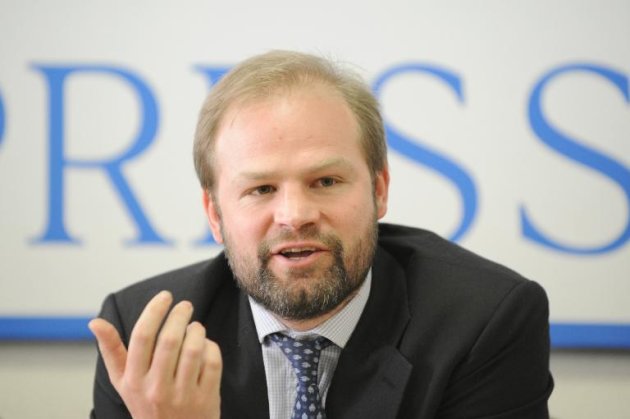
AFP/AFP/File - Amnesty International's Europe and Central Asia director,John Dalhuisen, speaks at a press conference to present Amnesty's annual human rights report in Moscow, on May 23, 2012
An urgent investigation must be launched into revelations that almost 800 babies and children were buried in a mass grave in Ireland near a home for unmarried mothers run by nuns, Amnesty said Thursday.
"This shocking case needs immediate attention and answers from the Irish government," said John Dalhuisen, Europe and Central Asia Programme Director at the London-based rights group.
"A thorough investigation must be carried out into how these children died and if ill-treatment, neglect or other human rights abuses factored into their deaths."
Death records suggest 796 children, from newborns to eight-year-olds, were deposited in a grave near a Catholic-run home in Tuam, County Galway, during the 35 years it operated from 1925 to 1961.
The government announced it was examining the "best means" to address the "deeply disturbing" revelations.
The septic tank, full to the brim with bones, was discovered in 1975 by locals when concrete slabs covering the tank broke up.
Until now, locals believed the bones mainly stemmed from the Great Irish famine of the 1840s when hundreds of thousands perished.
St Mary's, run by the Bons Secours Sisters, was one of several such 'mother and baby' homes in early 20th century Ireland.
Amnesty urged the government to look into the actions of all of these institutions.
"As disturbing as the 'Tuam babies' case is, it must not be viewed in isolation," said Colm O'Gorman, Executive Director, Amnesty International Ireland.
"The Irish authorities must look into possible allegations of ill-treatment of women and children in other so-called 'mother and baby homes' and other institutions run by the state or religious authorities."
Thousands of unmarried pregnant women -- labelled at the time as 'fallen women' -- were sent to the homes to have their babies.
The women were ostracised by the conservative Catholic society and were often forced to hand over their children for adoption.
The recently discovered death records for St Mary's show that 796 children died from malnutrition and infectious diseases, such as measles and TB.
Amnesty called the Irish government's response to previous claims as "minimalist" and urged it to "deal comprehensively with its past".
"The Irish Government must not view this and other cases as merely historic and beyond its human rights obligations," said Dalhuisen.
The rights group explained that if the home closed in 1961, it is possible that some of the deaths occurred at a time when the European Convention on Human Rights was in force.
*A Government inquiry into the mother and baby homes will not be confined to St Mary’s inTuam, Minister for ChildrenCharlie Flanaganhas said.
“Tuam was not unique in Ireland as a mother and baby home. Mother and baby homes were not unique in Ireland as cold and brutal places of refuge from an unforgiving society,” he said in a statement this afternoon.
It was expected that officials will advise the Government on the best form of inquiry “before the end of the month”, he said.
“The history of mother and baby homes in Ireland in the early and middle decades of the 20th century reflects a brutally unforgiving response by society, religious and State institutions and, in many cases, families, to young women and children when they were in most need and most vulnerable,” he said. “It is fully recognised by me and my Government colleagues that we need to establish the truth,” he said.
The Taoiseach said this evening he has asked Mr Flanagan to draw together a number of senior officials from across departments to deal with the issue.
Speaking on the matter at a jobs announcement at the head office of computer manufacturer Hewlett Packard in Palo Alto, California, on his three-day trade mission to Silicon Valley, he said:
“I have asked Minister Flanagan to draw together a number of senior officials from across the departments until we see what the scale of it is, what’s involved here and whether this is isolated, or whether there are others around the country that need to be looked at.
“It is to decide what is the best thing to do in the interests of dealing with yet another element of our country’s past.
“I understand that this has been known about since 1972 and clearly the Dáil records themselves show references to inspections under the system that operated at health level way back in the 1930s - so it is an issue that we need to deal with.
“Minister Flanagan will keep Government up to date very much with what is the best structure to put in place, to look at this and if there are others in locations elsewhere around the country.”
This afternoon the Catholic Archbishop of Dublin Diarmuid Martin called for “a full bodied inquiry” into mother and baby homes in Ireland and adoptions made from them. All who had responsibility for the homes should provide “full co-operation” with such an inquiry, he said.
In a statement this afternoon, he urged “those responsible for running any of the mother and baby homes in Ireland, or any other person having information about mass graves, to give that information to the authorities.” He described details of what has emerged from Tuam over recent days as “sickening”.
In separate statements this afternoon, religious congregations who ran the mother and baby homes in Ireland welcomed the Government’s actions. The Sisters of Bons Secours, who ran the Tuam home, said they welcomed “the recent Government announcement to initiate an investigation in an effort to establish the full truth of what happened.”
"Every human life is unique" - Archbishop of Dublin
Sunday, July 7th, 2013
“We gather here this afternoon to reflect and to pray. We gather to reflect on the gift and on the meaning of human life. We pray for the fostering in our society and in our nation of a new culture of life. We gather as disciples of Jesus Christ convinced of the power of prayer. We reflect on the power of prayer to change hearts and to form new hearts. The Christian vision of life is a joyful one which rejoices in the value and the meaning of life and in the unique dignity of each and every human life. The Gospel reading reminds us first of all that our faith is a joyful faith. It is not a faith of negatives. The teaching of the Church is first and foremost a teaching which inspires and leads us to joy, rather than being a faith – as is often said – of just negatives, of negative rules and regulations. We gather to remember that every human life is unique and must be fostered and protected and cherished. The Christian life must be marked by our awareness of the presence of Jesus Christ in our midst. As we heard in the Gospel reading, when Jesus is present with us then our attitude cannot be like that of those who want Jesus’ disciples just to be rules bound, to follow a check list of practices, to think that they witness to their faith by externals which are not rooted in the heart. “When the bridegroom is with us”, the Gospel reminds us, then we cannot but celebrate. When Jesus is with us in our hearts, then we must radiate joy and hope and share that joy and hope.
The Christian message is a message which respects life and respects every human life, from the moment of conception to the moment of natural death and at every moment in-between. It respects the life of the unborn; it cherishes and wishes to protect the lives of mothers and mothers to be. It searches out for those who are the weakest; it must stand by all those who suffer anguish and anxiety and hopelessness, all those who are suffering poverty and hunger and precariousness, all those who for any reason are unable to celebrate the joy of life which is their birthright as children of God. Being Pro-Life is not about a slogan or a mantra. It is about being someone who searches for the foundations of the deepest meaning of life and the roots of hope. I often repeat the beautiful and simple words of Pope Benedict at the Mass of his inauguration as Bishop of Rome: “We are not some casual and meaningless product of evolution. Each of us is the result of a thought of God. Each of us is willed, each of us is loved, each of us is necessary”. Willed! Loved! Necessary! Being Pro-Life means working for a culture in which every human person is recognised as willed, loved and necessary and where every human person feels assured that they are willed, loved and necessary. This is a radical call. Every Christian must live that call radically, without compromise. That is the sense of the later comments of Jesus in our Gospel reading. There is no way in which we can look on our faith somehow as an additional patch that we can stick on to the torn cloth of our day-to-day lives of weakness and compromise. Jesus reminds us that a mentality which thinks that being a Christian can be patched on to a life of compromise and blankness will end up just destroying the garment of hope and leaving our faith a situation worse than where we started from. Christianity is a new message which supersedes and must take precedence in the choices of our life and cannot co-habit with values which have no abiding strength. The new wine of the Gospel can only be put into new wineskins, into a renewed culture, because otherwise it will simply spill into waste land. Our commitment to the Christian understanding of of life must be one which is new and fresh, spirited and inspiring, joyful and meaningful. What are the characteristics of this new life of faith which we celebrate in the Year of Faith? Only yesterday Pope Francis published his first encyclical –Lumen Fidei - which as he said himself is primarily the work of Pope Benedict who had been working on it for some time. Pope Francis spoke about the truth of faith. But he immediately asks a question that is posed today in different ways by believers and non-believers each attempting to arrive at a different answer. He asks “How can the Christian faith provide a service to the common good with regard to the right way of understanding truth?” The answer to this question will only be found when we understand that the truth of our faith is a truth about love. The Pope says: “If love is not tied to truth, it falls prey to fickle emotions and cannot stand the test of time”. But he quickly adds: “If love needs truth, truth also needs love. Love and truth are inseparable. Without love, truth becomes cold, impersonal and oppressive for people’s day-to-day lives. The truth we seek, the truth that gives meaning to our journey through life, enlightens us whenever we are touched by love. One who loves realizes that love is an experience of truth, that it opens our eyes to see reality in a new way” As Christians we are called to live the truth in charity. We are called to witness to love in the way we respect the life of every brother and sister. The Christian faith is never an inward self centred faith; it always breaks out into a genuine care of the other, into forming a community of love and care. All our activities in defending the truth of our faith have to be an expression of the love and care which Jesus revealed as the very truth of God. All our activities in the defence of human life must be seen and understood and be recognised not as narrow politics or ideology or spin-doctoring, but as authentic loving concern, Our response to anyone who challenges us with narrow politics or ideology or spin-doctoring must never be a response on those same terms, but be one which witnesses to the nobility of a truth witnessed in love. There is tendency for many in our times to say that religion is just a matter for the private life of each individual and therefore it has no place within the public square. Faith, they say, is the private affair of individual. It has no place within the building of the common good. Certainly we must say that faith can never and never should be forced or imposed on others. But that does not mean that the values which spring from faith and the values which inspire believing citizens have no legitimacy in a pluralistic society and should be simply pushed aside into the dustbins of irrelevance, Certainly individual believers and indeed the institutions of the Church have often failed our society and its members and indeed failed the very integrity of their own convictions. But it would be unhistorical to the point of dishonesty to say that the Judeo-Christian tradition and the witness and commitment of believers have not shaped the fundamental good principles which inspire our Irish society. As believers we must renew our conviction that the message of love which is the fundamental truth of our faith has a essential contribution to bring to our society and to the search for meaning and hope which are the crucial questions for which so many seek answers today. No matter what legislation is in place in any nation and no matter how such legislation will change, the Church will continue to teach about the dignity of each human life and how the direct and wilful destruction of human life is never acceptable. Our challenge is to witness to that truth not through slogans but through the witness of life that we give. If we do not focus on the quality and the integrity of our witness to the convictions of our conscience and our belief, then what we say will appear, to quote Pope Francis, as being “cold, impersonal and oppressive for people’s day-to-day lives”. In prayer and in silence now let us open our hearts to the saving love of Jesus Christ, who came that we might have life and who is himself life, because he revealed to us who our God is, a God of love, a God who is faithful, a God who is with us, a God who liberates.” ENDS:

 Pat McGrath reports on touching scenes as Sean Parker was laid to rest



 Gardaí examining whether crimes committed at Tuam site
 Criminal action could follow Tuam babies case, says White
 Pressure builds for Tuam babies inquiry
 Church has no records of burials at Tuam home, says archbishop
