Showing posts with label Dublin: Guerin Calls For Commission To Probe Garda Misconduct: REPORT. Show all posts

18 May 2014

Dearth Of Political Will To Reform Garda Siochana Goes Back Further Than Morris


WELL, that’s sorted then. Everything has changed. The publication of the Guerin report into allegations made by Sergeant Maurice McCabe has ushered in a new era. From here on, An Garda Siochána will be properly accountable. Whistleblowers will be listened to.
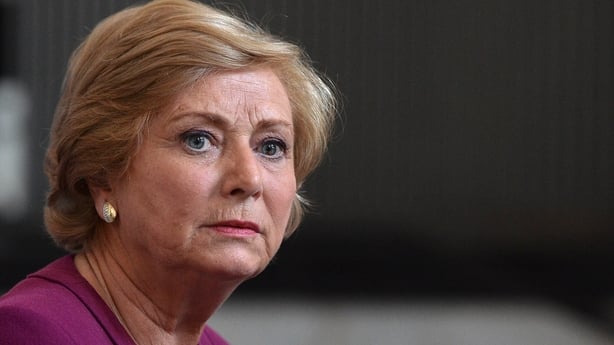
A review of the workings of the Department of Justice will highlight its failings in ignoring the cries of Sergeant McCabe. The new Minister for Justice, Frances Fitzgerald, is pushing a broom through her portfolio, sweeping out the dirt, letting in the light. That bygone age of Shatter and Callinan is fading from memory. Move along, it’s all sorted. Nothing more to see here.
By their actions shall we know them. The first move in a new dispensation is to recognise the past, and where it went wrong. Just over a week out from the publication of Guerin, and it seems that that cathartic imperative has been completely ignored.
Take the Taoiseach’s so-called apology to McCabe in the Dáil last week. The garda sergeant and his family had endured six years of hell trying to drag the truth out into the open. The citizenry at large believe he has done a considerable service to the State. And how does the country’s leader acknowledge this service?
“I’ve already spoken of the importance and the right of people to bring issues to public notice that should be brought to public notice. So in that regard, I have no problem apologising to Sergeant McCabe for the issues that he raised and for the fact that his raising these matters wasn’t dealt with more speedily.”
That was it. Mealy-mouthed (“no problem apologising”); qualified (“the right of people to bring issues to public notice”); practically insulting (“wasn’t dealt with more speedily”).
If that’s the attitude at the top of government, what real hope is there that change can be effected? Apart from exhibiting common decency to properly acknowledge service rendered, Kenny might have reflected on his own role in McCabe’s nightmare.
Throughout 2012 and into 2013, McCabe contacted the Taoiseach directly in desperation. His every effort to have malpractice exposed was being stymied. Surely the elected leader of the country would intervene and bring an end to the madness?
On July 23, 2012, he wrote to Kenny.
“I made a complaint to Minister Shatter through the Confidential Recipient in relation to corruption. Minister Shatter has been slow to act on this complaint and the Confidential Recipient is frustrated by the minister’s inaction and as a result is not replying to correspondence. Is it possible for you or your official to assist me? All I am asking is that the minister or his officials meet with me and my legal team so that we can hand over the evidence of corruption, which in fact is also on the investigation files. I request that this email remain very private and confidential so that I will not be subjected to more victimisation. I can forward you a copy of the complaint should you wish to look at it to familiarise yourself.”
He received an anodyne reply. On October 22, 2012, McCabe wrote again to the Taoiseach’s office: “In July 2012, I reported to An Taoiseach’s office matters of a criminal nature, and matters of major public concern and outcry if they were to become known.”
He went on to outline how he had repeatedly tried to have the issues addressed: “Again I contacted the Taoiseach’s office wanting to know the up-to-date position and I received an email back stalling me. This happened again and again and again to the point that I received an email stating again that Minister Shatter would contact me. Never happened. I responded stating Minister Shatter has no role seeing he deemed my allegations were without evidence.”
Sean Guerin looked at the same evidence and it took him just nine weeks to find wholesale malpractice.
This wasn’t some fruitcake or malcontent writing to Kenny. A cursory inquiry — even to the likes of Pat Rabbitte or Charlie Flanagan who had met McCabe — would have established that he was a man to whom one should listen. The Taoiseach did nothing of the sort.
And at the end of it all, after the ugly truths were laid bare by Guerin, Kenny wasn’t even man enough to issue a proper apology. He should have done so on behalf of the State, but equally he should have done so for his own personal failings in the matter.
Then there’s the new minister — Kenny’s close confidante — who was appointed to clean up Shatter’s mess. On her first full day in office, Frances Fitzgerald met with the Interim Garda Commissioner, Nóirín O’Sullivan. The following day Guerin was published, and by that evening, McCabe had been informed that his access to the Pulse computer system was being restored. He had been denied access since December 2012.
What changed? On publication of the Guerin Report, did Commissioner O’Sullivan suddenly realise that McCabe had been grievously wronged and he and the force would be better served if he was freed to do his job properly?
Or was she directed by the new minister to clear up this Pulse business rapido, because the minister and her boss didn’t want to be putting up with reporters banging on about it at every pause in the hustings?
Make no mistake. The restoration of McCabe’s access to Pulse was rooted in political considerations, and was not at all motivated by an acceptance that he had been done a grievous wrong.
On Thursday, Fitzgerald issued a long speech to the House on how she will operate her new broom. Nowhere therein was there acknowledgment of the real failings of this whole affair. Nor was there any acceptance that a lowly sergeant had exposed the failings right up through each level of the tower of power, all the way to the top.
One might have hoped that she would exhibit grace where Kenny had failed to do so, but unfortunately she is cut from the same cloth as her leader.
The reality is that the turbulent cop is not viewed in the upper echelons of power as somebody who has rendered the State a service. He is regarded as an irritant, one who has cost the Government political capital, and cost poor Alan Shatter his job. He created a headache for Kenny, in effectively forcing the Taoiseach to remove the Garda commissioner — the exact circumstances of which are still shrouded in mystery.
Irrespective of what service such a person might render the State, he will invariably be resented rather than lauded in the upper echelons. That Kenny and those around him are incapable of rising above such petty concerns speaks volumes.
There will be new laws and powers that will go some way towards addressing the shortcomings of the act that emerged post the Morris Tribunal. However, a dearth of political will to reform An Garda Siochána extends back much further than Morris or the corruption in Donegal that it investigated. As of now, all the signs are that once the furore dies down, the political urgency to drive change will disappear into the ether.

14 May 2014

Dublin: Doctor Alleges That Special Needs Boy Was Tortured While In Garda Custody

Dr alleges Gardaí 'stripped and whipped special needs boy'
An Oireachtas committee has heard allegations that a teenager with special needs was assaulted by officers at a Garda station.
Dr Richard O'Flaherty, a GP in Limerick, made the allegations at the Oireachtas Justice committee.

He said the whistleblowers charter for Gardaí should be extended to doctors who want to reveal allegations of misconduct.
Under parliamentary privilege, he gave one example of how Gardaí had allegedly abused one teenager with special needs.

Dr O'Flaherty said: "A special needs boy was arrested (after) he borrowed his father's car. (He has) the body of a 17-year-old (and) the mind of an eight to 10 (year-old).

"He was taken in, stripped of his pants and underpants, whipped with a belt and told that they arrested his dad also and gave him the same thing." www.justice4all.ie


Martin Callinan resigned as garda commissioner at the end of March
The Garda Inspectorate has told an Oireachtas Committee that training within the gardaí has ground to a halt and this would come back to haunt the force.
The Association of Garda Sergeants and Inspectors also complained about the lack of ongoing training for gardaí.
Chief inspector Robert Olsen told the committee that continuous professional development within the gardaí had ground to a halt.
He said he has met detectives who have never been trained and he said that this will come back to haunt the force.
Earlier, the committee was told that there should be no political involvement in the appointment of senior garda officers.
Amnesty and the Irish Council for Civil Liberties said ministers should not be appointing assistant commissioners or the garda commissioner, and that the current structure of political promotion needs to be looked at as a matter of urgency.
The Garda Síochána Ombudsman Commission told TDs and senators that it is now receiving a better level of service from gardaí and that it will now have unfettered access to PULSE for its investigations.
GSOC Chairman Simon O'Brien said the Garda Commissioner should be subject to oversight and to GSOC investigations, as chief police officers are in other jurisdictions internationally.
Speaking on RTÉ's News at One, Mr O'Brien said GSOC recognised that the garda commissioner had different powers in relation to State security, and the command and control of their force.
The committee also heard that the policing and intelligence services in An Garda Síochána should be separated.
Transparency International said Ireland does not need a foreign intelligence service and does not need spies in embassies.
John Devitt said the intelligence service should be focused on preventing crime, not scrutinising members of the media or the Oireachtas.
The Irish Traveller Movement told the committee that more than half of Travellers were not satisfied with gardaí and there is a very high level of mistrust between the two.
Brigid Quilligan said allegations of race profiling and Traveller children being placed on the PULSE system does huge damage to the relationship.
Earlier, committee chairman David Stanton said it is unlikely the Secretary General of the Department of Justice will be questioned about the resignation of former garda commissioner Martin Callinan.
Speaking on RTÉ's Today with Sean O'Rourke, Mr Stanton said some committee members felt that they should allow the commission chaired by Justice Nial Fennelly to deal with the issue.
He said Secretary General Brian Purcell was reluctant to answer questions on the matter, as he was concerned that it might prejudice the work of the commission.
Mr Stanton said a final decision on the matter would be made on Thursday.
He said Mr Purcell will be questioned about the administration of the Department of Justice and how paperwork was and is being managed.
The Fine Gael TD said he expected Mr Purcell will be asked about how he and his colleagues responded to the claims of garda whistleblower Sergeant Maurice McCabe.
Mr Stanton said failure to deliver the letter from the garda commissioner to then minister for justice Alan Shatter in regard to concerns about the Ian Bailey case will probably come up in questioning as well.
Mr Purcell has agreed to appear before the committee but he has written to the committee requesting that members refrain from asking him any questions about Mr Callinan's departure.
In a letter to the clerk of the committee, Mr Purcell claims any questions related to the departure of former commissioner Callinan could "potentially trench" on the work of the Fennelly Commission.
He said: "It is now potentially prejudicial to the work of the Fennelly Commission" that the committee would "proceed on a parallel investigation of a matter which is within the terms of reference of the Fennelly Commission."
Mr Purcell said it may well be perceived that the work of the Fennelly Commission would be undermined if questions were asked that are the subject matter of the commission.
The committee has asked Mr Purcell to appear before it tomorrow, but Mr Purcell has requested that his appearance be put back for a week or two.
Committee members want to discuss the fallout from the Guerin Report, administration issues in the department and Mr Callinan's resignation.
Committee to discuss planned garda authority
Mr Stanton said the committee would be looking at the Government's decision to set up a new garda authority, at the powers of GSOC, the role of the Garda Inspectorate, as well as the interaction between the Garda Commissioner, the Minister for Justice and the Department and the Oireachtas.
Mr Stanton said the committee will be giving a report to Minister for Justice Frances Fitzgerald on best practice as it sees it.
The report would be with Ms Fitzgerald before the summer recess, he added.
Yesterday, the Government announced a review of the performance of the Department of Justice following adverse findings in the Guerin Report last week.
The report was critical of how allegations made by Mr McCabe were handled by gardaí, Mr Shatter and the Department of Justice.
It led to the resignation of Mr Shatter last week.
Elsewhere, the Taoiseach said he expects that the Government will come back with proposals for the establishment of the garda authority before the summer recess.
He told the Dáil that it is a tight deadline to have it done by the end of the year.
Mr Kenny said there will be a two-hour debate tomorrow on the Guerin Report and TDs will return to the debate in two weeks.
Doctors describes alleged garda abuses
A medical doctor has outlined to the committee a number of alleged garda abuses of people in custody.
Dr Richard O'Flaherty, who is a member of the Justice4All  www.justice4all.ie  campaign, claimed that a woman went into a diabetic coma in custody after she was prevented from going to the toilet and initially prevented from going to hospital.
The doctor alleged this took place in Limerick 11 years ago.
He also alleged that a 17-year-old with special needs was arrested, stripped and whipped with a belt.
The doctor claimed to have statements and photographs of alleged beatings in custody.
The chairman of the committee accepted that the allegations were disturbing, but told the doctor that the committee's focus was on the 2005 Garda Act.
Dr O'Flaherty said all patients detained by gardaí should be entitled to their own doctor of choice and there should be a protocol for vulnerable people in custody.
He also pointed out that gardaí are not trained to dispense medication such as methadone or use defibrillators.
Keywords: justice

Dublin: Ombudsman Seeks True Independence From Garda Commissioner: UPDATED

GSOC is calling for the Garda Commissioner to be subject to oversight, in a submission to the joint Oireachtas Committee on Justice, Defence and Equality.
The submission is about the effectiveness of legislation regarding oversight of An Garda Síochána.
It says up to now the Garda Commissioner has been legally outside the remit of the Garda Ombudsman Commission, and the role should be subject to its independent oversight.
The submission also proposes that Gardaí no longer carry out investigations for GSOC, because it says that is questionable in terms of independence and effectiveness.
The Commission also suggests that GSOC should become an external confidential recipient, to deal with allegations of corruption or malpractice from Gardaí. The Garda watchdog is to be given stronger powers and an oversight body is to review how detectives run serious crime investigations as part of efforts to restore integrity in the justice system.
In the wake of the damning Guerin review, which revealed a whistleblower sergeant was ignored for years, the Government has agreed a series of reforms on top of a statutory commission of inquiry into the scandal.
New laws to toughen the Garda Siochana Ombudsman Commission will be introduced while the Garda Inspectorate will carry out a comprehensive review into serious crime investigation, management, operational and procedural issues in the force.
Newly appointed Justice Minister Frances Fitzgerald revealed the commitments after warnings of corruption and malpractice from Sergeant Maurice McCabe went unheeded for years.
"This spectrum of issues is complex and deep-rooted ranging from high-level issues such as oversight, change management and the role of whistle-blowers; to local administration and internal communication; to matters of basic policing, performance and human resources," she said.
"It requires comprehensive and sustained corrective action. And that's what will happen."
Taoiseach Enda Kenny was urged by Sinn Fein president Gerry Adams to apologise to Sgt McCabe over his treatment by Garda and government officials.
Mr Kenny said he has already spoken of the right for people to bring issues to public notice.
"In that regard I've no problem apologising to Sgt McCabe for the issues that he raised and for the fact that his raising these matters was not dealt with more speedily in the first instance," the Taoiseach said.
Other Government initiatives on Garda reform include the selection of a new Garda Commissioner, a role currently being filled on an interim basis by Noirin O'Sullivan.
There will also be an independent expert review of performance, management and administration of the Department of Justice before the Dail summer recess.
Civil servants were castigated on the back of the Guerin review which found no evidence of any serious examination of Sgt McCabe's disturbing allegations and virtually no records could be found of any decisions or advice taken.
Secretary general of the department Brian Purcell is to face a grilling at the Oireachtas Justice Committee over the handling of complaints.
The independent Garda Authority is also in the frame to be up and running by the end of the year as part of the wider reforms.
The Guerin review did not determine the veracity of Sgt McCabe's allegations of malpractice and rogue policing in several investigations at the Bailieboro station where he was posted.
But it vindicated his claim that there were concerns over how they were handled including complaints inadequately acted on into an attempted rape, child abduction, false imprisonment of a girl and child pornography.
An eight week review of the claims found that no official body was prepared to accept the word of the highly regarded officer.
In a statement after the Cabinet discussed the hard-hitting report, Ms Fitzgerald said many of the grave issues examined were the subject of previous reports, particularly the Morris tribunal into bad policing in Co Donegal in the 1990s.
Its shocking assessment of the quality of policing and culture of the force were intended to be addressed with the formation of the Garda Ombudsman and calls for whistleblower legislation.
Ms Fitzgerald said the terms of reference for the statutory inquiry into the McCabe affair have yet to be finalised.
"The Guerin report raises many serious concerns in relation to professional standards, training, supervision of probationary Gardai, local management of the force and many more issues," the minister said.
"It is absolutely essential that we need to act on the findings of the Guerin report in relation to basic policing and day-to-day management of the force at district level.
"With all the focus on high level matters, we must not lose sight of the need to address these basic policing matters."
A special Cabinet committee, chaired by the Taoiseach and focusing on reform of the justice system, will meet next week to progress the Government proposals.

13 May 2014

Dublin: Department Of Justice, Gardai and Ombudsman Facing Big Shake-Up

Frances Fitzgerald took on the role of Minister for Justice after Alan Shatter's resignation last week
The Government is to review the performance of the Department of Justice following adverse findings in the Guerin Report last week.
The report was critical of how allegations made by garda whistleblower Sergeant Maurice McCabe were handled by gardaí, former minister for justice Alan Shatter and the Department of Justice.
It led to the resignation of Mr Shatter last week.
There is to be an independent expert review of performance, management and administration of the Department of Justice.
The Cabinet has also decided to urgently bring forward legislation to strengthen the Garda Síochána Ombudsman Commission, which was also subject to criticism in the report.
A Commission of Investigation is to be established. The terms of reference have yet to be finalised, but are to be in line with those proposed in the Guerin Report.
The Garda Inspectorate is to carry out a comprehensive inquiry into serious crime investigation, management, operational and procedural issues.
An independent Garda Authority is to be up and running by the end of the year, according to a statement by the minister.
A new Garda Commissioner is to be recruited by open competition in parallel with the establishment of the new authority.
Minister for Justice Francis Fitzgerald said: "Today's decisions by Government represent a comprehensive response to the serious and varied spectrum of issues raised in the Guerin Report."
The Dáil is to debate the report on Thursday.
Speaking in the Dáil this afternoon, Taoiseach Enda Kenny said he has "no problem in apologising" to Sgt McCabe for the delay in dealing with his allegations.
Replying to a question from Sinn Féin's Gerry Adams, Mr Kenny said Sgt McCabe has been vindicated by the Guerin Report.
Mr Kenny said: "I've already spoken of the importance and the right of people to bring issues to public notice that should be brought to public notice.
"I've no problem apologising to Sergeant McCabe for the issues that he raised, and for the fact that his raising these matters wasn't dealt with more expediently in the first instance."
Minister for Public Expenditure and Reform Brendan Howlin earlier said he felt echoes of the Morris Tribunal and Morris Report when he read the Guerin Report.
Mr Howlin said full confidence needed to be restored in An Garda Síochána.
The Irish Council for Civil Liberties (ICCL) has objected to the proposal that a "comprehensive inquiry into serious crime investigation, management, operational and procedural issues" be carried out by the Garda Inspectorate.
It said the idea that the inspectorate is well placed to conduct a comprehensive inquiry is deeply misguided.
Brian Purcell to appear before committee
Meanwhile, Secretary General of the Department of Justice Brian Purcell has agreed to appear before the Oireachtas Justice Committee.
Committee members want to discuss the fallout from the Guerin Report, administration issues in the department and the resignation of former garda commissioner Martin Callinan.
However, Mr Purcell has written to the committee requesting that members refrain from asking him any questions about Mr Callinan's departure.
In a letter to the Clerk of the committee, Mr Purcell claims that any questions related to the departure of former Commissioner Callinan could "potentially trench" on the work of the Fennelly Commission.
He said "it is now potentially prejudicial to the work of the Fennelly Commission" that the committee would "proceed on a parallel investigation of a matter which is within the terms of reference of the Fennelly Commission".
Mr Purcell said it may well be perceived that the work of the Fennelly Commission would be undermined if questions were asked which are the subject matter of the commission.
The committee has asked Mr Purcell to appear before it on Thursday, but Mr Purcell has requested that his appearance be put back for a week or two.
Earlier, Sinn Féin TD Pádraig Mac Lochlainn, who is the party's spokesperson on justice and also a member of the justice committee, said that Mr Purcell would face robust questions at the committee.
Speaking on RTÉ's News At One, the Sinn Féin TD for Donegal North East said: "The lessons of the Morris Tribunal, the new beginning to policing that was promised, and that came with the Garda Síochána Act 2005, clearly didn't materialise.
"The culture remained in the Department of Justice, and in senior levels of An Garda Síochána, that again has led us to this crisis where the public confidence in the administration of justice has been seriously undermined."
Minister Fitzgerald has said that any decision she takes in relation to Mr Purcell will be taken on the basis of objective evidence about the running of her department.
Answering questions about the future of Mr Purcell, she said any decision would take into account the expert group that is to examine the workings of the Department of Justice.
Ms Fitzgerald also said issues of natural justice that arise would have to be observed.
She told journalists that the Cooke Report into suggestions of bugging at the office of the Garda Ombudsman would be with Government soon.
She said its findings would be taken into account when the Government frames the terms of reference of the Inquiry being set up arising from the Guerin Report.

12 May 2014

Louth Village: Victim's Family Appeal For Help To Trace Hit-and-Run Driver

A County Louth family is appealing for help after their son died in a suspected hit-and-run at the weekend.
35-year-old Keith Byrne was discovered on the side of the road in Louth village yesterday morning, a short distance from his home in Carnalogue.
Paramedics were called to the scene to bring him to hospital, where he was pronounced dead.
He had suffered injuries consistent with having been struck by a vehicle.
Gardaí have appealed for anyone who travelled the road through Louth village between 4.15am and 4.45am yesterday morning to contact them. www.garda.ie 

11 May 2014

DUBLIN: Top Rank Gardai Set To Quit As Government Nears Collapse

Noirín O’Sullivan summons eight senior officers as calls intensify for heads to roll in whistleblower crisis
THE uppermost ranks of An Garda Síochána are facing a drastic exodus in the coming weeks, amid the fallout from the whistleblower scandal, the Irish Mail on Sunday has revealed.
Morale in the force is at an all-time low, with bitter rows and fingerpointing currently taking place over who is responsible for the series of failings that have already led to the departure of commissioner Martin Callinan and minister Alan Shatter.

While several high-ranking gardaí had already planned to depart by July for pension reasons, their numbers are now expected to be swollen by other senior gardaí who will either leave voluntarily or be strongly encouraged to leave in a shake-up of senior ranks.

News of the exodus came as Communications Minister Pat Rabbitte warned of ‘endemic problems in the administration of justice in the Garda Síochána’. He said it was ‘manifestly absurd’ that senior gardaí had been allowed to investigate allegations of wrongdoing against themselves.

It is understood that Interim Garda Commissioner Noirin O'Sullivan met a group of about eight of the of the force's 12 assistant commissioners on Thursday night last to discuss the scandal. Yesterday Assistant

Commissioner Kieran Kenny met with garda whistleblower Sergeant Maurice McCabe and told him that his access to the Garda's Pulse computer system had been restored.
Garda sources last night indicated that several senior gardai between the ranks of superintendent and the very highest ranks at the very top of the force could be expected to leave their jobs.
One garda said: What Is Happening is astounding. A Commissioner has lost his job, a justice minister is gone, a confidential recipient is gone. ... and it will not stop at this.
There will be others loosing their jobs if it is found that there is substance to what other whistleblowers are claiming.

GOVERNMENT IS ON THE BRINK OF COLLAPSE:

Pat Rabbitte has become the first government minister to warn that the Coalition will not last full term if the "current drift" is allowed to continue.
In an interview with the Sunday Independent, Mr Rabbitte also set out Labour's demand for tax relief and an end to spending cuts in the Budget: "It's gone as far as it can in terms of cuts and taxes," he said.

The Communications Minister's stark warning that government stability was at risk will this weekend set off alarm bells in Fine Gael, which is still coming to terms with the resignation of the Justice Minister Alan Shatter after months of controversy.

The Taoiseach, Enda Kenny, and the Tanaiste and Labour leader, Eamon Gilmore, have made clear the Coalition's intention to remain in office until the centenary of the Easter Rising in 2016.

Mr Rabbitte, who is regarded as the Pretorian Guard of the coalition, has stressed the need for urgent action and warned that unless the Government gets a "firm grip" of the political agenda he would be "fearful of our

chances of seeing 2016 as a Government".

Mr Rabbitte's comments are the first public indication so far that the stability of the Government is in jeopardy as a result of the controversies which have surrounded Mr Shatter, the Department of Justice and An Garda Siochana.

Mr Rabbitte said: "The single-minded focus of the first three years has to be restored. If the drift of the last three months is allowed continue and if the Government divides into factions, it is pretty obvious, really, that we won't see 2016."

In a challenging analysis of the Government's recent performance, Mr Rabbitte said: "The people are saying to get a grip, things have been sliding for the last three months, things have been going off the rails."

He warned that this "drift" would have to be addressed before summer.

"The Government has to put a coherent plan together. There has been drift, the issues affecting Justice went on far too long".

Mr Rabbitte also said the coalition parties needed to meet behind closed doors and settle on what he called a "programme of renewal".

He said: "There is no point in taking flight or panicking, but we need, in the light of criticisms, to settle a new direction."

He also warned that the broad parameters of the Budget, and of a new stimulus plan for the economy, needed to be swiftly resolved.

"Very difficult questions will have to be settled after the elections and before the summer recess," he said.

Though Budget 2015 will not be delivered until the third week of October, Mr Rabbitte said: "You cannot find yourself in September just starting some of the big questions."

He said the Government would have to immediately decide "in terms of the Budget, what latitude do we have, what can be started in construction for example".

In particular, Mr Rabbitte warned that the Government would have to deal with high tax rates: "The current high tax rates are just not tolerable any more. There has to be some tax relief."
He added: "The Universal Social Charge is punitive. It is not acceptable in any democracy, where you are dependent on the allegiance of the people, that citizens become liable to the top rate of tax at the industrial wage."

Regarded as a linchpin minister to maintain relations between the coalition parties, Mr Rabbitte also warned that public tolerance of further tax or water charge increases was over.

He said: "The consistent response I am getting from people on the door is that 'we understand the macroeconomics but we don't care anymore; you have pushed it as far as you can push it'."

The public, he said, "understand that the Government has difficult decisions, but it's gone as far as it can in terms of cuts and taxes for them".

"What people are saying on water charges is that this had f*****g better be the last piece of the austerity jigsaw."
There were, he noted, 61,000 more people at work, but he said people were saying, "'I haven't had a wage increase in six years, my son can't afford a house, we are worried about college fees' – that's the new narrative".

He also said that a new construction policy had to be advanced before summer.

The central issue remained the economy, he said, but the questions were changing, the debate was moving.

It was, he said, "no longer about what price can we borrow money, it's about issues such as when do we start a housing programme".

Mr Rabbitte said it was astonishing that once again there was an abnormal construction sector.

"Supply and demand are out of kilter, in Dublin in particular, because of the unexpected constraint where the builders left standing are being refused credit by the banks," he said.

Mr Rabbitte said: "The banks' refusal to advance credit is not causing the banks grief because they're more interested in correcting their internal ratios before the stress tests."

He also claimed voters in the local and European elections were in an "awful dilemma" – they did not want to vote for the government parties, they were, in Dublin, vehement against FF, and they did not want to vote for
Sinn Fein. "People are in a state of bewilderment, it absolutely has not settled," he said.

9 May 2014

DUBLIN: Guerin Calls For Commission To Probe Garda Misconduct: UPDATED: REPORT:


Sean Guerin was asked to examine allegations that serious crimes were not investigated properly
The Government has published a report by barrister Sean Guerin into allegations that serious crimes were not investigated properly by gardaí.
The report, which runs to 300 pages, has been described as "serious" and "damning".
The Guerin inquiry was established to examine the actions taken by gardaí, the Department of Justice, the Minister for Justice and any other public body on the allegations by Sergeant Maurice McCabe of garda misconduct.
The report found there is cause for concern as to the adequacy of the investigations into those complaints and also for the personal and professional consequences for Sgt McCabe.
It also says that An Garda Síochána does not seem to have been able to hold heed to the voice of a man held in high regard by his immediate superiors.
It says a comprehensive commission of investigation needs to be established to investigate a number of incidents.
Disciplinary proceedings are recommended against a probationer garda.
The report found the effectiveness of the PULSE system should be reviewed.
UPDATE:
Frances Fitzgerald said the Government is taking steps to remedy systemic failings
Minister for Justice Frances Fitzgerald has said there will be a Commission of Investigation following the publication of the Guerin Report.
The report looked into allegations that serious crimes were not investigated properly by gardaí.
It found there is cause for concern as to the adequacy of the investigations into complaints by Sergeant Maurice McCabe and also for the personal and professional consequences for the whistleblower.
Ms Fitzgerald said the Government is taking steps to remedy what she said are systemic failings uncovered in the report.
Ms Fitzgerald said the Guerin Report is clear that operational policies and procedures within An Garda Síochána were inadequate in the cases examined.
She said this included performance and professional standards, consistency of approach, recording and management, and supervision of individual cases.
Ms Fitzgerald said the report raises fundamental questions about the treatment and response to victims of crime, which must be addressed as a matter of priority.
She welcomed the fact that acting Garda Commissioner Noirín O'Sullivan had recognised the need for a sea change in the force and she would be backing her in any changes she felt necessary.
The minister said the process of reform was already under way. 
Ms Fitzgerald said she views with the utmost gravity the concerns raised by Mr Guerin about procedures for dealing with complaints in the Department of Justice and she intends to ensure that the issues raised are dealt with comprehensively and robustly.
Asked if there might be resignations in her department, she said if root and branch changes were needed they would happen.
McCabe 'vindicated' after report's publication
Sgt McCabe has said he feels vindicated after the publication of the report.
He said a huge weight has been taken off his shoulders and that of his family.
Sgt McCabe said he wanted to go on record as the report has been issued.
He said he had not yet read all of the report, but he believes that what he has read concurs with what he has being saying about how his allegations were handled by gardaí and the Department of Justice.
Sgt McCabe also thanked Fianna Fáil leader Micheál Martin for handing his dossier to the Taosieach.
He said he is looking forward to co-operating with the Commission of Investigation and that his allegations are investigated.
Sgt McCabe said he can move on from today, but he also noted that he is still restricted in his use of the garda PULSE system.
Commissioner O'Sullivan has said gardaí will cooperate fully with the Commission of Investigation.
She said: "The report by Mr Sean Guerin SC is detailed and extensive.
"I am currently studying it closely in conjunction with my senior management team to identify immediate actions that can be taken as part of our process of change that is currently under way."
However, there was no reference in her statement to Sgt McCabe's access to the PULSE system.
Kenny says terms will be established in weeks
Taoiseach Enda Kenny has said the terms of reference for the Commission of Investigation will be finalised in the coming weeks.
Speaking in Co Galway this afternoon, Mr Kenny said nobody was immune from being brought before the law on issues of criminality. 
He said the recommendations and conclusions in the report would now be considered by the Government. 
Mr Kenny said the structure and way in which a Commission of Investigation would operate would be considered in the coming weeks.
He described the setting up of a commission as a "deep and far reaching process".
The Taoiseach said it was essential that the way in which justice was administered was dealt with as part of any part of garda reform.
Call for comprehensive commission of investigation
The Guerin inquiry was established to examine the actions taken by gardaí, the Department of Justice, the Minister for Justice and any other public body on the allegations by Sgt McCabe of garda misconduct.
The report also states that An Garda Síochána does not seem to have been able to hold heed to the voice of a man held in high regard by his immediate superiors.
It said a comprehensive commission of investigation needs to be established to investigate a number of incidents.
Disciplinary proceedings are recommended against a probationer garda.
The report found the effectiveness of the PULSE system should be reviewed.
In his conclusions, Mr Guerin said that in An Garda Síochána "a critical voice is in danger of being heard as a contrary voice".
"The paradigm of the whistleblower is an unattractive one ... is seen as someone who is not on the team," he said.
He said the challenge of "accommodating and learning from legitimate criticism is always going to be a difficult one, especially in a disciplined force".
The report said the complaints made by Sgt McCabe "all have their origin in what he perceived to be a failure" of An Garda Síochána in the Bailieboro district "to apply itself with discipline and determination to the investigation and prosecution of crime".
The report said it is beyond its scope to make any determination of the complaints made by Sgt McCabe.
However, it said the documents examined "give cause to share the concern expressed in them".
It said there is cause for concern as to the adequacy of the investigations that have taken place into Sgt McCabe's complaints and whether "all appropriate steps" have been taken.
Mr Guerin said Sgt McCabe co-operated with the review in an "unfailingly courteous and obliging manner".
Mr Guerin said he interviewed the sergeant on four separate occasions, totalling just under 19 hours.
He said Sgt McCabe made himself available upon request and freely and openly discussed the matters that were the subject of the review.
He said Sgt McCabe's complaint about his experience within the An Garda Síochána since making his complaints calls for examination.
Mr Guerin said this is beyond the scope of his terms of reference, but said extensive documentation he has seen, which was given to then minister for justice Alan Shatter by Sgt McCabe's solicitors in September 2012, expresses Sgt McCabe's concerns and needs to be examined.
The report notes no malice on the part of Sgt McCabe in the making of his various complaints, as noted in the Byrne-McGinn report.
Mr Guerin said the time he has spent with Sgt McCabe leads him to "no different conclusion".
He said it would be better to get the testimony of the men and women who worked with Sgt McCabe in the years before he made the complaints.
The report concluded that Mr Shatter did not heed the voice of Sgt McCabe despite the high esteem in which he was held.
Mr Guerin said that was despite the minister having specific statutory powers in the area of complaints from members.
Mr Guerin said there was a "near total absence" in the papers he had examined of written records of submissions made, or advice given, to the minister by his officials.
He said he had seen no written internal records of decisions made by the minister.
Mr Guerin said the approach adopted "had the result that there was no independent investigation" of Sgt McCabe's complaints.
He concluded that the absence of written records was a "matter of some concern", saying it appeared that the minister had acted "on foot of advice received by the commissioner", without that advice being questioned or analysed.
Guerin regrets lack of documentation from GSOC
Mr Guerin has said it was unfortunate that he received no documentation from the Garda Síochána Ombudsman Commission.
In his introductory comments to the report, Mr Guerin said that Simon O'Brien from GSOC wrote to him on 13 March to indicate that the gathering of the relevant material was under way as a priority.
However, on 23 April, Mr Guerin received a letter from solicitors on behalf of GSOC raising "various preliminary legal and practical issues" that he said might usefully have been raised at an earlier stage.
Mr Guerin said he does not understand why the obstacles to seeing them were first identified to him in correspondence delivered shortly before close of business on the eve of the date upon which the report was due.
He said the lack of documents from GSOC has been an obstacle to any assessment as part of the review of the adequacy of the investigations conducted by GSOC.
He did say however, that it did not interfere with the other work of the review.
GSOC said this evening that it had gathered a good deal of documentation for the Guerin review, but felt it necessary to seek assurances about its use.
It said it was regrettable the review did not see its files.
"While we were aware of the tight timescale, we were not aware of an exact fixed deadline date," GSOC said.
GSOC said a complainant referred to in the report currently has a case open with the organisation.
It said that case was subject to an investigation and a judicial review.
GSOC said it had wished to discuss this issue with Mr Guerin before his report was published.
Concern over Bailieboro Garda Station
The report makes a list of suggestions for matters relating to Bailieboro Garda Station that should be considered and examined under the terms of reference of a commission of investigation.
It calls firstly for an examination into "the general conduct of policing at Bailieboro Garda District in 2007/2008".
It also recommends an examination of:
- the management and operational structure and resource allocation for Bailieboro garda district to include:
- the number of probationary gardaí assigned to Bailieboro district at the relevant times
- the number and experience of sergeants available to supervise and monitor the probationary gardaí
- the significance - if any - of the absence of an inspector permanently allocated to Bailieboro Garda Station
- the stability, continuity and experience available at district officer level in Bailieboro district at the relevant times
- the arrangements in operation for the supervision and monitoring of probationary gardaí in relation to their operational - and specifically investigative duties
It also calls for the standard of accommodation at Bailieboro Garda Station and its possible impact on the policing function to be considered.
Martin calls for discrete inquiry
Mr Martin this afternoon said the Guerin Report recommendation that a Commission of Investigation be held into the issues raised by Sgt McCabe must be honoured.
Speaking on RTÉ's News at One, Mr Martin said a discrete inquiry into these specific areas would be the correct course of action.
He said a long, unwieldy inquiry could result if the terms of investigation were broadened.
Mr Martin said the report was a vindication of Sgt McCabe.
He said the lesson to be learned was that no matter how difficult and inconvenient it may be for people in authority, they must listen.
Sinn Féin's justice spokesperson called on the Government and the acting Garda Commissioner to immediately restore full rights to Sgt McCabe.
Pádraig Mac Lochlainn told RTÉ's News at One Sgt McCabe still did not have access to the PULSE system and he was the subject of ongoing harassment and bullying.
Mr Mac Lochlainn said he asked Sgt McCabe if any senior garda officer had sought to help him and protect him from harassment and Sgt McCabe had answered "no".
Mr Mac Lochlainn said the Guerin Report was a vindication of Sgt McCabe.
Sinn Féin leader Gerry Adams said the behaviour of garda management outlined in the report constituted a betrayal of the brave men and women of the force. He called for reform of the justice system.
Independent TD Clare Daly said there was a need for a reconstituted garda force, where it was unlikely there would be a place for many of the current senior management.
Wilson calls for transparency
Garda whistleblower John Wilson has said the Guerin Report highlights the need for a new era of transparency and accountability in An Garda Síochána.
He said the vast majority of gardaí are decent hard-working individuals who carry out their duty in the most difficult and dangerous circumstances.
He said the Government owes it to them that confidence be restored.
The retired garda said that Sgt McCabe is an honourable police officer who is still being denied access to the PULSE computer system and is still being victimised and harassed.
He also said the interim Garda Commissioner should "lift the phone and talk to him".
Minister for Transport Leo Varadkar has said Alan Shatter took responsibility for the mistakes of many people when he resigned. 
Mr Varadkar said he did not think for one second that Mr Shatter "was the bad guy in all of this".
He said it seemed the trust he had placed in garda management and GSOC, to carry out investigations, seemed to have been misplaced.
Speaking at the sod turning for the Gort-Tuam motorway in Co Galway this afternoon, Mr Varadkar said the Guerin Report created a number of big questions for the Government.
He said a lot needed to be done to restore public confidence in the justice system.