Showing posts with label Dublin: 13 Troubled Children Exported Because Our Childcare System Has Failed Them. Show all posts

7 Sept 2014

London: 'Care' Children Placed By Councils In Squalid, Lonely, Unsuitable B&B's: Barnardo's

More than half of councils in England have placed children leaving care in the past year in bed and breakfasts for at least 28 days, figures show.
The figure of more than 800 care leavers having been placed in accommodation in that period is much higher than that recorded by the Department for Education, Barnardo's said, www.barnardos.org.uk 
The children's charity said it goes against guidance that B&Bs should only be used as a last resort.
In an undercover investigation following the release of the figures to the charity, director Puja Darbari said the accommodation she experienced was entirely unsuitable and she was "horrified" by conditions faced by some young people, which included damp and mouldy bedrooms and rot around windows.
The charity is launching new guidance to local authorities as part of its Beyond Care campaign, aiming to help them provide support to those leaving care.
Ms Darbari said: "Many of these young people have already had horrific childhoods. Surely we owe them more than placing them on their own in such squalid and isolating environments, against government guidelines."
Alternatives encouraged by the charity include supported lodgings and short-term or overnight emergency accommodation featuring specialist support for young people.
The charity is also urging people to write to their local councillors on the issue to "demand better conditions for these young people who have no one else to turn to".
Councillor Nick Forbes, vice chairman of the Local Government Association's children and young people's board, said the report lays bare the difficulties faced by some councils in finding emergency care options for young people.
"The cost of providing children's social care is one of the biggest challenges facing councils up and down the country, particularly in light of the huge increase in demand for vital child protection services amid 40% cuts to local government during this parliament.
"Councils are facing real difficulties in finding emergency care for vulnerable young people due to a shortage of housing, funding cuts and record numbers of them entering the care system.
"There are a number of schemes already in place across the country, some highlighted in the Barnardo's report, with several councils already developing proposals for innovative work that will improve and expand the range of emergency care options available for young people.
"We must make sure that practice is being shared amongst everyone who has a duty to protect young people so that we ensure they are given support through accommodation that is appropriate, safe, and tailored towards their individual needs."
-----------
  1. www.barnardos.com
    Barnardo's in Australia, Ireland, New Zealand and the UK share a common name and heritage. This site introduces the four childcare agencies and provides links to ...
  2. www.barnardos.ie/?section=1   Cached
    Barnardos is Ireland's largest independent children's charity. We work with vulnerable children and their families, and campaign for the rights of all children.
-----------

20 Aug 2014

Gloucestershore: Parents Left Children In Squalor, Hungry And Infested With Head Lice: REPORT

A couple were able to leave their children malnourished, infested with head lice and living in squalor because they played off the authorities against one another, a report has found.
The report, commissioned by Gloucestershire Safeguarding Children Board (GSCB), came after the children's parents were found guilty and jailed for neglecting five of their children between 2007 and 2012.
It revealed that teachers, doctors, health professionals and social workers knew about the family over a 16-year period but did not take any formal action until one of the children was admitted to hospital with severe nappy rash.
The senior case review into the family - who cannot be named for legal reasons - found five "missed opportunities" for the authorities to intervene which were not taken because neglect was not treated as seriously as other forms of abuse.
It found 127 recorded contacts between the family and primary health care professionals over a 27-month period.
The children were seen by GPs amid complaints from teachers and health workers that the children were suffering with tooth decay, poor growth and weight gain, delayed development, anaemia, poor hygiene and severe nappy rash.
The review found there was continuing evidence that the parents often turned away health professionals and the mother put her own needs above those of her children.
The children's grandmother admitted her daughter was "manipulative and aggressive" and very controlling, with GPs observing she was very "skilled at playing off one agency against the other".
"One of the most concerning issues in this case is the apparent lack of understanding, at the time, of neglect and its impact by a number of the key professionals working with this family," the report said.
"All of the signs were there, and had been for many years, that these children were suffering or likely to suffer significant harm due to neglect.
"At the time, there were clear difficulties in ensuring that all of the information on all of the children was available to be considered and drawn together in order to ensure a complete picture.
"A child protection conference would have allowed all the professionals involved to share the history of the family and the current concerns in a setting chaired by an independent person, where the parents could not have decided who was involved and who was not."
David McCallum, chair of the GSCB, said the authorities involved had underestimated the impact of long-term neglect.
"For most of the time when children's social care and other agencies were working with this family, they treated the neglect as a 'child in need' issue and that probably underestimated the extent of the harm those children were suffering," Mr McCallum said.
"One of the real points of learning for all the organisations involved is that neglect can be really, really harmful to children, especially when it's long-term."

19 Jun 2014

Dublin: Loss Of Single-Parent Payment May Plunge Thousands Of Children Into Greater Poverty: *UPDATED


The Department of Social Protection says those affected will be contacted this month to explain the change
Over 9,000 families are to lose their One-Parent Family Payment next month when a previously announced measure comes into effect.
*Over 9,000 families are to lose their One-Parent Family Payment from today, when a previously-announced measure comes into effect.
Changes to the eligibility criteria for the payment were announced two years ago, gradually reducing the number of those receiving the benefit.
The change is dependent on the age of the claimant's children, along with when the payment began.
The Department for Social Protection has said the reforms are designed to get lone parents out of the poverty trap and into work.
Those who have relied on the payment will be offered a range of supports by the department.
Most recipients will transfer to Jobseeker's Allowance, while some families may be moved to an increased Family Income Supplement payment or Carer's Allowance payment.
By this time next year almost 60,000 families will have lost the One-Parent Family Payment.
The change is dependent on the age of the claimant’s children, along with when the payment was first commenced.
From 3 July 9,100 families will no longer receive the payment.
The Department of Social Protection says those affected will be contacted this month to explain the change and to offer further assistance if needed.
Most recipients will transfer to Jobseekers Allowance, while some families may be moved to an increased Family Income Supplement payments or Carer's Allowance payment.
Reform Alliance Senator Fidelma Healy Eames raised this issue in the Seanad today.
-----------
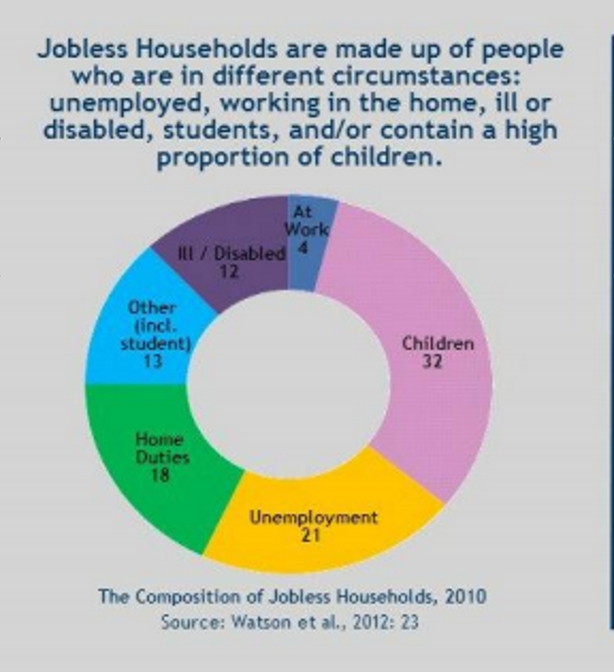
*Nearly a quarter of households in Ireland can be described as "jobless" compared with a European average of 11%.

That is according to a report by the National Economic and Social Council, which acts as an analyst on economic and social issues.
Jobless households are where no-one in the household is working or only has very limited access to work. Around 23% of Irish households fall under this category.
The report suggests the issue will not be resolved through a single solution, but through a package of supports.
It examines the characteristics of jobless households and finds that those who live in jobless homes are more likely to have no educational qualifications, to have never worked or to be unskilled.
Dr Helen Johnston, the report’s author, said a distinguishing feature of the households is the likelihood they are families with children and are at high-risk of poverty.
As a result, many jobless homes run for generations.
The National Economic and Social Council has said that a wide range of responses is needed from improving adult literacy to better services for people with disabilities.
The report also says the Government must address the obstacles faced by people transferring from social welfare to employment.
In response, Taoiseach Enda Kenny said one of the Government's priorities is to dismantle the passive welfare system that abandoned such large numbers of households to lifelong dependency on the State.
Infographic: National Economic and Social Council 

17 Jun 2014

Dublin: Temple Street Children's Hospital Facing "Significant, Unpalatable" Cuts

One of the State’s leading hospital for children, Temple Street Children’s University Hospital in Dublin has warned the Health Service Executive it is “simply not possible” to make the savings demanded of it without giving rise to “significant and unpalatable” service cuts.
Despite its misgivings, the hospital is going ahead with cuts designed to save €2.8 million from its budget, which may include the non-filling of posts already in the process of being filled. It says it needs additional funding to stave off cuts.
According to an internal memo seen by The Irish Times, senior managers say it is their “hope and intent” the cuts will “help ensure that wards and theatres remain open over the remainder of the year”.
Last month HSE national director of acute hospitals Tony O’Connell instructed all hospitals to draw up cost containment plans. Temple Street’s allocation from the HSE is being cut by €2.6 million, or 3 per cent, this year, but managers argue the financial challenge is even greater than that. They attribute this to significant reductions in income from private insurers, more spending on staff increment and pension costs, and a failure to make savings envisaged under the Haddington Road Agreement.

Financial break-even

The HSE told the hospital its allocation was based on maintaining frontline services and achieving financial break-even in 2014. “Temple Street promptly responded to the HSE stating that it is simply not possible, based on current funding levels, to achieve savings of the magnitude required without giving rise to significant and unpalatable service cuts,” the memo states.
The hospital deferred the cuts needed to make savings demanded by the HSE in the first quarter of the year. However, chief executive Mona Baker and finance director John Fitzpatrick say in the memo that while this was appropriate, they are gravely concerned the situation remains materially unchanged mid-year.
“We do not have the mandate to maintain expenditure at existing levels and thus further action is required,” the memo states. Savings of €1.5 million are targeted through a “rigorous review and reprioritisation of all vacant posts, even if already in the process of being filled”. Spending on some “non-direct patient care areas” is to be deferred or ended, saving €500,000. Further savings will be achieved on high-cost drugs and minor capital works.

3 Jun 2014

Dublin: Use Of Prozac Questioned By Mother Of Boy (14) Who Committed Suicide

The mother of a 14-year-old boy who took his own life told his inquest she would never have agreed to him taking Prozac if she had known the side effects.
Stephanie McGill-Lynch was giving evidence at the Dublin Coroner’s Court inquest into the death of Jake McGill-Lynch, Woodford Terrace, Clondalkin, Dublin 22, at Tallaght Hospital on March 20th last year.
Jake was diagnosed with Asperger Syndrome in early 2012 and suffered anxiety. He had been seeing a psychologist at Clondalkin Linn Dara Child and Adolescent Mental Health Services and was referred to a psychiatrist in January 2013, as his anxiety was increasing due to his upcoming Junior Cert.

Information leaflet

Consultant child psychiatrist Dr Maria Migone prescribed Prozac. Ms McGill-Lynch said that she and her husband were not told that the side effects include an increase in suicidal ideation.
When they collected the prescription, no patient information leaflet was included. She said in the US Prozac carries a “black label” warning that it should be given to under-18s with anxiety problems only after all other avenues are exhausted.
“My child is dead. I was not told this could happen.
“My husband and I were not given any literature . . . if we were, there is no mother in her right mind going to let their child have a drug that can cause suicide and self-harm when they are suffering from those symptoms. Asperger’s is . . . a condition that no tablet or medication is going to fix,” she said.
Dr Migone said the US black label was based on a meta-analysis carried out in 2003 but later studies found no increase in suicidal ideation in young people with anxiety taking Prozac.
In 2003 the Irish Medicines Board recommended Prozac as being the safest drug of its type for children under 18, she told the court.
Jake was with his father John Lynch when Dr Migone prescribed the Prozac. She said she would have discussed some side effects and said Ms McGill-Lynch should feel free to call her having read the patient information leaflet that would come with the Prozac.
Ms McGill-Lynch said only Mr Lynch had signed the consent form. Dr Migone said that it was her understanding that Ms McGill-Lynch was in favour of the medication.
The court heard that Jake was in an online relationship with an American girl and they had broken up a few days before he died.
Dr Migone said relationship breakdown was a “stressor” in adolescents.
On the night he died, Jake’s parents discovered he had injured himself when Mr Lynch called him for supper. Mr Lynch started CPR. Jake was taken to Tallaght Hospital but died later that night.
Coroner Dr Brian Farrell said the “farewell” note found on Jake’s bed was “extremely profound” and showed “great understanding” for everyone involved.
The inquest was adjourned to July 14th for more evidence.

2 Jun 2014

London: Mentally Ill Children Sent Hundreds Of Miles For Beds: Psychiatrists

Children with mental illnesses are being sent hundreds of miles away from their families just so they can secure a bed space in hospital, psychiatrists have warned.
Cuts to mental health services have led to a "bed crisis", the Royal College of Psychiatrists said.
The shortage has meant that patients are being sent home because of the absence of a bed, or being sectioned just to secure one, according to a poll by the College's Psychiatric Trainees' Committee (PTC).
And many patients, including children, had been sent miles away from their local area just so they could be admitted.
The survey of 576 junior doctors working in psychiatry in the UK found that a quarter had been told by a bed manager that unless their patient ha d been sectioned they would not get a bed.
And 37% said a colleague's decision to detain a patient under the Mental Health Act had been influenced by the fact that doing so might make the provision of a bed more likely.
Seven in 10 said they had experienced difficulty in finding an appropriate bed for a patient at least once. And 83% of those working in services for children and teens had experienced the problem.
Four in five said they had been forced to send a patient outside the local area for a bed, with a third saying they had sent a patient at least 100 miles outside their local area.
For those working with children and teenagers, 22% said they had been forced to send a child 200 miles away from their families just so they could have a bed.
And 28% said they have sent a critically unwell patient home because no bed could be found.
"This survey investigated for the first time the extent of several practices which occur as a result of the bed crisis," said trainee psychiatrist Dr Alex Langford.
"These practices signify serious risk to patients due to a crippling lack of resources.
"The fact that psychiatrists are having to consider sectioning patients to secure something as basic as a bed is a huge warning sign of extreme under-provision. These doctors are using the only option they have left to ensure very unwell people get the care they desperately need.
"The survey shows just how pervasively dangerous the disparity between resourcing in mental health and other medical specialities is."
Professor Sue Bailey, president of the Royal College of Psychiatrists, added: "This survey provides further evidence that mental health services are approaching a tipping point.
"Continued cuts to services can only result in further distress and discomfort for patients, many of whom are young, vulnerable, some of whom are forced to receive care far from home. This situation is simply not acceptable."
www.youngminds.org.uk 
Care and Support Minister Norman Lamb said: "I want to build a fairer society with better care for anyone with a mental health problem. That's why we launched the Mental Health Action Plan in January which sets out priorities for improving care. We also published the Crisis Care Concordat which is clear that crisis beds must be available locally. It has teeth because the CQC will inspect against its standards.
"It is not acceptable to detain someone under the Mental Health Act purely because they need an inpatient bed. Decisions about detention must always be taken in the best interests of patients at risk of harming themselves or others.
"Inpatient beds must always be available for those who need them. We are scrutinising local NHS plans to make sure they put mental health on a par with physical health."
Labour's shadow health minister Luciana Berger added: "This survey adds to an alarming picture of what is fast becoming a crisis in our mental health services.
"The Government promised that people with mental health conditions would be given the same level of service as those with physical conditions yet, on their watch, mental health beds are being cut, people are waiting too long for vital services, staff are under pressure and some of the NHS's most vulnerable patients are being turned away from the help that they need.
"This situation cannot continue. The Government must take responsibility and urgently get to grips with this unacceptable failure before more lives are put at risk."

21 May 2014

Dublin: 13 Troubled Children Exported Because Our Childcare System Has Failed Them

TWELVE deeply troubled children are being held at care facilities abroad, at an annual cost of €3.6m, because there is nowhere suitable for them in Ireland, the Irish Independent has learned.
A 13th child is expected to be sent to a secure facility abroad in the coming days.
Authorities are sending him to England after a court was told the care system in Ireland was unable to deal with the 16-year-old's complex problems. The revelation comes as figures released by the Child and Family Agency show it costs the State significantly less to send problem children abroad than it does to provide services for them here.

The average cost of out-of-state care per child is €5,769 per week. This compares with a cost of around €10,000 per week to detain a child at the Ballydowd special care unit in Dublin.
There are only 17 special care places in Ireland, 10 at Ballydowd with the remainder split between Gleann Alainn in Cork and Coovagh House in Limerick.

These are high security units where children with serious emotional and behavioural difficulties can be detained, subject to a court order, even if they have not committed a crime.
The new Child and Family Agency is planning to spend millions to double to 34 the places available by 2016.

The additional special care places are to be built at Gleann Alainn and at St Ita's Hospital in Portrane, Co Dublin. However, the agency admits that even when this is done, there may still be a need to send some children abroad.

"The referral of children abroad for specialised therapeutic interventions is an established feature within our health and social care system and decisions in each case are made in the best interests of the individual," a spokeswoman said.

However, Jillian van Turnhout, a senator and children's rights campaigner, questioned this approach. "I am concerned that we are sending children to care facilities abroad due to a lack of specialised facilities here in Ireland," she said.

Ms van Turnhout said a better solution would be "investing in a home-grown solution that develops our domestic expertise and puts the best interests of the child at the centre of the process."

The latest case involves a Dublin teenager who has been diagnosed with a number of disorders.
He is being sent to the St Andrew's in Northampton, which has over 100 beds for children with challenging behaviour.

During a hearing at Dublin Children's Court, Judge John O'Connor said child welfare agencies here believed the teenager did not meet the criteria for being placed in a secure care facility in Ireland as they were not equipped to deal with his "complex needs".

The teenager, who has been diagnosed with autism, attention deficit hyperactivity disorder, oppositional defiance disorder and development co-ordination disorder, had appeared in the court on a series of theft charges and one for knife possession.

The Child and Family Agency is in the process of securing High Court orders in both Ireland and England so that the boy can be detained in Northampton. As well as sending troubled children to Northampton, it has also used facilities such as Oakview Hospital in Kent; St Mary's in Scotland and Boystown in Nebraska.

  1. www.boystown.org/locations/nebraska   Cached
    With the world-famous Village of Boys Town as its base, Boys Town Nebraska today serves children and families across the Midwest and from across the country.
Cases where children might be sent abroad include ones involving extreme aggression and violence, damaging sexually provocative and threatening behaviour, and complex mental health issues.

Irish Independent