 Hinkley Point B and Hinkley Point A nuclear power stations beside the Bristol Channel in England
--------

*Rural residents opposed to wind farms are planning to protest this morning outside a meeting of the Irish Wind Energy Association in Kilkenny.
The protesters say wind is not the viable source of energy that its promoters claim.
Yesterday, permission was granted to a wind farm in Co Offaly where nine turbines are due to be constructed, after An Bord Pleanála gave the go ahead, with conditions.
There are 216 wind farms online and operational in 27 counties on the island of Ireland.
Adrian O'Neill from the group Old Leighlin Against Wind Turbines in Co Carlow said: "(Today's meeting) is a show of strength from rural residents from Donegal to Cork who have been campaigning against the over-zealous development of wind farms being imposed on small rural communities."
He added evidence from Germany showed that wind energy was not sustainable.
"Germany has pumped something in the region of €7bn into renewables in the last 15 years, and €2bn of that has gone into wind energy.
"The (German authorities) have admitted that wind energy polciy has been an abject failure. We want to stop that from happening (here)."
Germany's green energy disaster: A cautionary tale for world leaders
Germany's Green Energy Is an Expensive Success
-------------
*The Greens have accused European chiefs of breaking their own competition rules and the Irish Government of turning a blind eye over the go-ahead for the new Hinkley nuclear project in the UK.
Located 150 miles (241km) from the Irish coast, the planned facility has been examined by watchdogs in Dublin for potential environmental risks which found “routine operation” would have no measurable radiological impact on Ireland or its seas.
Eamon Ryan, Green Party leader who lost his parliamentary seat at the last election, said the European Commission sign-off allows electricity to be generated at Hinkley at twice the price of alternative renewables.
“The decision supports an uncommon market, which brings us back to a highly centralised energy model and hinders the development of a cleaner, safer and more efficient energy future for everyone,” he said.
“The Irish government have turned a blind eye to the dawning of this new nuclear age in Britain.
“There is no accounting for the security risks that come with the building of such a plant, and no apportioning of the massive clean-up costs that will come when the plant has to be decommissioned.”
Mr Ryan called on Environment Minister Alan Kelly to explain what action the Government intends to take over the development of Hinkley.
The Department of the Environment said they had not received a full written report from Brussels on the state aid ruling.
“When these details are received they will be examined and a decision will be taken as to what action, if any, is required to be taken by Ireland. Matters in relation to State Aid are generally a matter for the of Department of Finance,” a spokesman said.
Michael Moynihan, Fianna Fáil spokesman on natural resources, called on Taoiseach Enda Kenny to state if he made any representations to Prime Minister David Cameron on Hinkley.
“Ireland needs to robustly defend its interests here. We cannot stand aside and watch Britain potentially build another harmful nuclear power plant, which could have a devastating environmental impact on the Irish Sea and on the Irish East Coast,” he said.
The department also said there is close contact with the British government on all their nuclear concerns – environment, management of radioactive waste and the rationale for new facilities.
Ireland’s radiation watchdog in 2013, examined five scenarios from a nuclear accident at UK sites and found the less likely the accident, the greater the impact in Ireland.
It pointed to the potential for food controls and farm protection from any scale of accident to ensure food was safe to eat and in the worst case scenario, a one in 50,000 event, people would be forced into bunkers or shelters.
It said, for people living in Ireland, a large release of radioactivity into the Irish Sea on the scale of Japan’s Fukushima would be lower than the annual radiation dose limit.
It examined weather patterns for 21 years and said radioactive contamination in the air would be transported away from Ireland “most of the time”.
The department also said it monitors the UK nuclear sector on an on-going basis and has regular talks with UK counterparts on general radiological policy and to raise matters concerns.
An Taisce, which unsuccessfully challenged the British government in the courts in London over plans for Hinkley, said their fight was totally different than the Commission’s inquiry and had been on a specific environmental issue.
Michael Colreavy, Sinn Féin energy spokesperson, branded Hinkley a regressive step.
“Energy policy under the Tory government has been at odds with public concerns about the environment and people’s health. This is demonstrated by the British government’s fervent promotion of fracking,” he said.
“There will be obvious concerns from Irish citizens about the construction of a nuclear power plant so close to Irish soil.”
-------------
The European Union has approved Britain's ambitious €20 billion plan to build its first nuclear plant for a generation.
The Hinkley Point C power station, which will be built with French and Chinese help, is 240km from the Irish coast.
There are two other power stations at the site in Somerset in southwest England.
The EU decision marks a major victory for nuclear energy three years after the Fukushima disaster.
The project had encountered fierce resistance from activists and several member states, but a vote by the union’s 28 commissioners narrowly approved the deal.
Hinkley Point is one of the world's most ambitious nuclear deals and is seen as a key boost to an industry brought to its knees by the 2011 Fukushima meltdown in Japan.
The EU Competition Commission, which led the inquiry, defended its decision, saying that Britain had "significantly modified" its plan in response to concerns raised by the EU about whether aspects of the deal amounted to state aid.
"On this basis and after a thorough investigation, the commission can now conclude that the support is compatible with EU state aid rules," EU Competition Commissioner Joaquin Almunia said in a statement.
Critics have complained that there are insufficient plans for the removal of the nuclear waste that the plant will produce.
Concerns about the project have also been raised by An Taisce and the Department of the Environment.
An Taisce today said: "The state aid investigation by the European Commission raises totally different issues to those raised by An Taisce's ongoing legal action.
"An Taisce's case is against the UK Government on the grounds that we believe they did not apply international law, EU law and English law correctly ... in that they failed to consult with their neighbours, the people of Ireland, prior to granting permission for Hinkley Point C."
The department said it had concerns about the effect on the environment, the management of radioactive waste, and the "rationale underpinning the proposed justification decision for new nuclear facilities".
It said it had discussions at ministerial and official level over several years about Hinkley Point C.
The department today said a report on the project by the Office of Radiological Protection found that the routine operation of the proposed nuclear power plants would have no measurable radiological impact on Ireland or the Irish marine environment.
Greenpeace has criticised the commission's decision and said it could well face legal challenges.
It claimed the decision was a sellout to nuclear interests and that European taxpayers would have to pay the cost.
Meanwhile, the Austrian government has said it would bring legal action against the commission's decision to the European Court of Justice.
Chancellor Werner Faymann and Vice Chancellor Reinhold Mitterlehner said Hinkley Point set a "bad precedent" because guaranteed payments had previously been reserved for renewable forms of energy.
They said they were opposing the commission's decision on economic and environmental grounds, claiming nuclear power was not a sustainable form of energy, was a mature technology and was not an option for combating climate change.
Other member states have voiced concerns that the project makes a mockery of the union’s stated policy to promote solar and wind power.
The European Commission, the EU's executive arm, launched the inquiry in late 2013, delving closely into the project's elaborate price guarantee system that critics claim will prove hugely expensive to British consumers for decades to come.
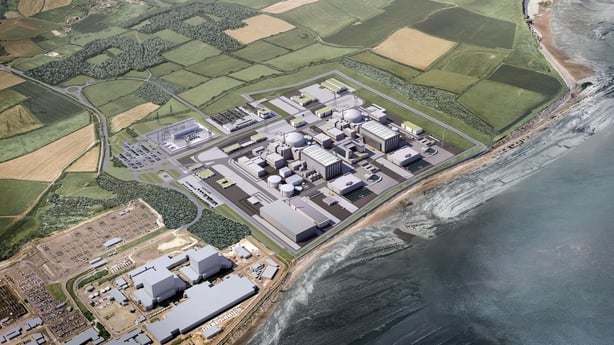
A year ago, the British government signed the huge €20bn deal for French firm EDF to build two reactors at Hinkley Point C to meet Britain's future energy needs.
Under the accord, EDF gets a 45-50% stake, China General Nuclear (CGN) and China National Nuclear Corporation (CNNC) will have a combined 30-40% and another French firm, Areva, will have 10%.
Hinkley Point C is the first nuclear power station to be built in the UK for 20 years and will start producing electricity in nine years’ time.
 It is expected to be in operation for 60 years thereafter.
The British government has insisted that he plant is an essential part of its strategy to more to a low carbon economy.
They have agreed to pay EDF a so-called strike price of £92.50 for every mega watt of electricity produced.
This is almost twice the current wholesale price for electricity and it will be paid for 35 years.
The older facilities at Hinkley Point produce about 1% of Britain's electricity. This is now expected to rise to 7% when the new facility is completed.
It is estimated that the construction of the new facility will require 5,600 construction workers and that overall about 25,000 related jobs will be created.
EDF has said the plant will be able to withstand a hit from a passenger jet and the pressurised water reactors that will be installed are much safer than previous designs.
*Rural residents opposed to wind farms are planning to protest this morning outside a meeting of the Irish Wind Energy Association in Kilkenny.
The protesters say wind is not the viable source of energy that its promoters claim.
Yesterday, permission was granted to a wind farm in Co Offaly where nine turbines are due to be constructed, after An Bord Pleanála gave the go ahead, with conditions.
There are 216 wind farms online and operational in 27 counties on the island of Ireland.
Adrian O'Neill from the group Old Leighlin Against Wind Turbines in Co Carlow said: "(Today's meeting) is a show of strength from rural residents from Donegal to Cork who have been campaigning against the over-zealous development of wind farms being imposed on small rural communities."
He added evidence from Germany showed that wind energy was not sustainable.
"Germany has pumped something in the region of €7bn into renewables in the last 15 years, and €2bn of that has gone into wind energy.
"The (German authorities) have admitted that wind energy polciy has been an abject failure. We want to stop that from happening (here)."
Germany's green energy disaster: A cautionary tale for world leaders
Germany's Green Energy Is an Expensive Success
-------------
*The Greens have accused European chiefs of breaking their own competition rules and the Irish Government of turning a blind eye over the go-ahead for the new Hinkley nuclear project in the UK.
Located 150 miles (241km) from the Irish coast, the planned facility has been examined by watchdogs in Dublin for potential environmental risks which found “routine operation” would have no measurable radiological impact on Ireland or its seas.
Eamon Ryan, Green Party leader who lost his parliamentary seat at the last election, said the European Commission sign-off allows electricity to be generated at Hinkley at twice the price of alternative renewables.
“The decision supports an uncommon market, which brings us back to a highly centralised energy model and hinders the development of a cleaner, safer and more efficient energy future for everyone,” he said.
“The Irish government have turned a blind eye to the dawning of this new nuclear age in Britain.
“There is no accounting for the security risks that come with the building of such a plant, and no apportioning of the massive clean-up costs that will come when the plant has to be decommissioned.”
Mr Ryan called on Environment Minister Alan Kelly to explain what action the Government intends to take over the development of Hinkley.
The Department of the Environment said they had not received a full written report from Brussels on the state aid ruling.
“When these details are received they will be examined and a decision will be taken as to what action, if any, is required to be taken by Ireland. Matters in relation to State Aid are generally a matter for the of Department of Finance,” a spokesman said.
Michael Moynihan, Fianna Fáil spokesman on natural resources, called on Taoiseach Enda Kenny to state if he made any representations to Prime Minister David Cameron on Hinkley.
“Ireland needs to robustly defend its interests here. We cannot stand aside and watch Britain potentially build another harmful nuclear power plant, which could have a devastating environmental impact on the Irish Sea and on the Irish East Coast,” he said.
The department also said there is close contact with the British government on all their nuclear concerns – environment, management of radioactive waste and the rationale for new facilities.
Ireland’s radiation watchdog in 2013, examined five scenarios from a nuclear accident at UK sites and found the less likely the accident, the greater the impact in Ireland.
It pointed to the potential for food controls and farm protection from any scale of accident to ensure food was safe to eat and in the worst case scenario, a one in 50,000 event, people would be forced into bunkers or shelters.
It said, for people living in Ireland, a large release of radioactivity into the Irish Sea on the scale of Japan’s Fukushima would be lower than the annual radiation dose limit.
It examined weather patterns for 21 years and said radioactive contamination in the air would be transported away from Ireland “most of the time”.
The department also said it monitors the UK nuclear sector on an on-going basis and has regular talks with UK counterparts on general radiological policy and to raise matters concerns.
An Taisce, which unsuccessfully challenged the British government in the courts in London over plans for Hinkley, said their fight was totally different than the Commission’s inquiry and had been on a specific environmental issue.
Michael Colreavy, Sinn Féin energy spokesperson, branded Hinkley a regressive step.
“Energy policy under the Tory government has been at odds with public concerns about the environment and people’s health. This is demonstrated by the British government’s fervent promotion of fracking,” he said.
“There will be obvious concerns from Irish citizens about the construction of a nuclear power plant so close to Irish soil.”
The European Union has approved Britain's ambitious €20 billion plan to build its first nuclear plant for a generation.
The Hinkley Point C power station, which will be built with French and Chinese help, is 240km from the Irish coast.
There are two other power stations at the site in Somerset in southwest England.
The EU decision marks a major victory for nuclear energy three years after the Fukushima disaster.
The project had encountered fierce resistance from activists and several member states, but a vote by the union’s 28 commissioners narrowly approved the deal.
Hinkley Point is one of the world's most ambitious nuclear deals and is seen as a key boost to an industry brought to its knees by the 2011 Fukushima meltdown in Japan.
The EU Competition Commission, which led the inquiry, defended its decision, saying that Britain had "significantly modified" its plan in response to concerns raised by the EU about whether aspects of the deal amounted to state aid.
"On this basis and after a thorough investigation, the commission can now conclude that the support is compatible with EU state aid rules," EU Competition Commissioner Joaquin Almunia said in a statement.
Critics have complained that there are insufficient plans for the removal of the nuclear waste that the plant will produce.
Concerns about the project have also been raised by An Taisce and the Department of the Environment.
An Taisce today said: "The state aid investigation by the European Commission raises totally different issues to those raised by An Taisce's ongoing legal action.
"An Taisce's case is against the UK Government on the grounds that we believe they did not apply international law, EU law and English law correctly ... in that they failed to consult with their neighbours, the people of Ireland, prior to granting permission for Hinkley Point C."
The department said it had concerns about the effect on the environment, the management of radioactive waste, and the "rationale underpinning the proposed justification decision for new nuclear facilities".
It said it had discussions at ministerial and official level over several years about Hinkley Point C.
The department today said a report on the project by the Office of Radiological Protection found that the routine operation of the proposed nuclear power plants would have no measurable radiological impact on Ireland or the Irish marine environment.
Greenpeace has criticised the commission's decision and said it could well face legal challenges.
It claimed the decision was a sellout to nuclear interests and that European taxpayers would have to pay the cost.
Meanwhile, the Austrian government has said it would bring legal action against the commission's decision to the European Court of Justice.
Chancellor Werner Faymann and Vice Chancellor Reinhold Mitterlehner said Hinkley Point set a "bad precedent" because guaranteed payments had previously been reserved for renewable forms of energy.
They said they were opposing the commission's decision on economic and environmental grounds, claiming nuclear power was not a sustainable form of energy, was a mature technology and was not an option for combating climate change.
Other member states have voiced concerns that the project makes a mockery of the union’s stated policy to promote solar and wind power.
The European Commission, the EU's executive arm, launched the inquiry in late 2013, delving closely into the project's elaborate price guarantee system that critics claim will prove hugely expensive to British consumers for decades to come.
A year ago, the British government signed the huge €20bn deal for French firm EDF to build two reactors at Hinkley Point C to meet Britain's future energy needs.
Under the accord, EDF gets a 45-50% stake, China General Nuclear (CGN) and China National Nuclear Corporation (CNNC) will have a combined 30-40% and another French firm, Areva, will have 10%.
Hinkley Point C is the first nuclear power station to be built in the UK for 20 years and will start producing electricity in nine years’ time.

The British government has insisted that he plant is an essential part of its strategy to more to a low carbon economy.
They have agreed to pay EDF a so-called strike price of £92.50 for every mega watt of electricity produced.
This is almost twice the current wholesale price for electricity and it will be paid for 35 years.
The older facilities at Hinkley Point produce about 1% of Britain's electricity. This is now expected to rise to 7% when the new facility is completed.
It is estimated that the construction of the new facility will require 5,600 construction workers and that overall about 25,000 related jobs will be created.
EDF has said the plant will be able to withstand a hit from a passenger jet and the pressurised water reactors that will be installed are much safer than previous designs.


